Your body isn't the same as it was last year. Here's why that's not a problem.
Let's be real. Sensitivity is not a fixed thing you're born with and keep forever. It shifts. It changes with stress, hormones, medications, age, relationship dynamics, how much sleep you got last Tuesday. The clitoris has over 8,000 nerve endings packed into a space smaller than a pea, which means it picks up on everything happening in your nervous system.
When your sensitivity changes, most traditional vibrators stay exactly the same. They rumble at one frequency, they push in one direction, they don't adapt. But lemon clitoral vibrators work differently. They use suction and pulsation patterns that respond more intuitively to your body's current state, not some imaginary "standard" sensitivity level you're supposed to have.
What actually happens when sensitivity shifts
Three major things change your clitoral sensitivity, and understanding them helps you stop thinking something's wrong with you.
Hormonal fluctuation. Estrogen and testosterone fluctuate throughout your cycle, through perimenopause, with hormonal birth control, and with life stress. These aren't small changes. They alter blood flow to genital tissue, the thickness of the vaginal and clitoral epithelium, and how quickly your nervous system responds to stimulation. A lemon vibrator's suction-based design works with these shifts rather than against them, because it doesn't rely on direct friction pressure that can feel wrong on days when tissue is thinner or more tender.
Nervous system state. Your clitoris is wired into your central nervous system, which means it mirrors your stress level, anxiety, whether you're in fight-or-flight or rest-and-digest mode. High cortisol literally dampens sensation. When you're stressed, exhausted, or carrying tension, your nervous system deprioritizes pleasure signals. This isn't psychological weakness. It's biology. Lemon vibrators use gentler, more nuanced stimulation patterns that can actually help draw your nervous system back into a receptive state, rather than the overwhelming intensity that traditional vibrators default to.
Tissue changes from life stages. Postpartum, perimenopausal, post-menopausal, or transitioning bodies all experience tissue thinning and reduced lubrication. The clitoris itself may feel more sensitive to pressure or less responsive to direct touch. This is when air-suction technology becomes genuinely game-changing. Unlike wands or bullet vibrators that rely on direct friction, lemon clitoral vibrators create a gentle seal and rhythmic suction that stimulates without the mechanical grinding.
Why lemon vibrators adapt when your sensitivity does
Here's the mechanical difference: traditional vibrators vibrate. That's their entire job description. They buzz at a set frequency, usually between 40-100 Hz. If your sensitivity is high, that frequency feels overwhelming. If it's low, it doesn't register. You're stuck managing pleasure around the toy, not the other way around.
Lemon clitoral vibrators use air-pulse technology, which creates a gentle sucking and releasing sensation. The pulses feel more like waves than jackhammer stimulation. This matters because your clitoris responds to rhythm and variation more than to pure intensity. When you're less sensitive, the pattern itself creates engagement even at lower settings. When you're hypersensitive, you can use the gentle pulse patterns without the aggressive friction that makes you feel rawness or overstimulation.
The multi-setting design also helps. Lemon vibrators typically offer 10-15 distinct patterns. You're not choosing between "off" and "medium buzz." You can find the exact rhythm your nervous system needs today. Maybe that's circular pulses on day three of your cycle and gentle waves during a stressful work week.

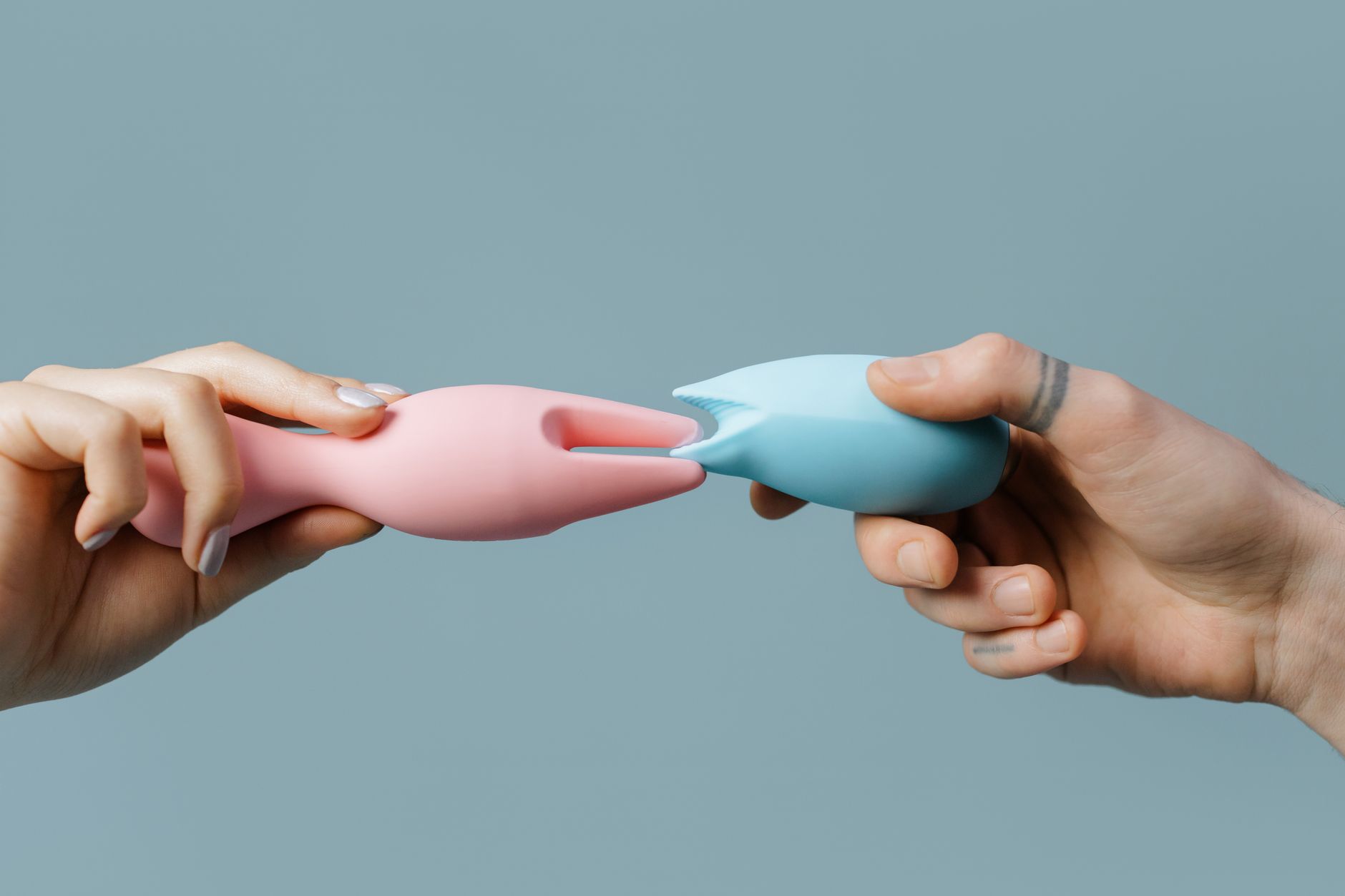
Photo by cottonbro studio on Pexels
The real reason sensitivity feels "wrong" sometimes
Here's what I see in my practice: people blame themselves. "I used to come in two minutes, now it takes 15." "This toy used to work and now it doesn't." "My partner thinks something's wrong with me." None of those things are true. What's true is that your body is responding accurately to your current state.
Postpartum bodies are depleted. Perimenopausal bodies are managing hormonal chaos. Stressed bodies are literally shutting down pleasure signals to conserve energy. That's not dysfunction. That's your body being honest about what it needs.
The problem with traditional vibrators is they don't account for honest bodies. They're built on the assumption that more vibration equals better pleasure, when actually the opposite is often true. When sensitivity is lower, you need variety and pattern, not intensity. When sensitivity is higher, you need gentleness and control.
Lemon clitoral vibrators handle both through design. The suction mechanism is inherently gentler than friction-based toys. The rhythm variations let you match your actual state instead of forcing yourself to match the toy's one-speed output.
How to find your sensitivity baseline and recalibrate
If your sensitivity has shifted and you feel lost, start here.
First, check in with your nervous system state. Are you stressed? Sleeping poorly? Recently postpartum? Managing a relationship shift? Those factors matter more than you think. You might not have a sensitivity problem. You might have a life-chaos problem. Both are valid. Both change how pleasure works.
Second, experiment with pattern before intensity. When you start with a new lemon vibrator or you're relearning your body, begin on the gentlest, slowest rhythm setting. Spend time there. Notice what patterns feel good. Surprise: sometimes the lowest settings feel better than the highest ones ever did, because they're actually matched to your nervous system rather than fighting it.
Third, warm up longer. When arousal takes longer to build, give yourself permission to extend your warm-up phase by 10-15 minutes. This isn't a failure. It's your body asking for more time to transition into pleasure mode. A lemon vibrator's varied patterns actually help here because you're not sitting with unchanging sensation. The rhythmic changes keep your nervous system engaged without the intensity.
Fourth, pay attention to your cycle and stress. If you're tracking your pleasure alongside your cycle, you might notice that certain patterns work best at certain times. That's not random. That's your nervous system giving you data. Use it. On high-stress weeks, maybe you shift to a different pattern than you use during calm weeks. That's adaptation. That's exactly what you want.
The shift from "toys don't work for me anymore" to "I needed a different toy"
One of the most common things I hear is: "I used to orgasm easily and now I can't." Usually, what actually happened is someone's sensitivity changed and they kept using the same toy that relied on intensity rather than variation.
When you switch to something like a lemon clitoral vibrator, the shift is often immediate. Not because your body suddenly started working again, but because the toy finally matches where your body actually is. The suction technology, the pattern variety, the gentler base intensity. These aren't premium features. They're the features that make pleasure accessible to bodies that have changed.
This is why so many people report that their most satisfying orgasms come after a sensitivity shift, once they find the right tool. Not because pleasure got better. Because they finally stopped fighting their body and started listening to it.
When to consider a different approach entirely
If you've tried different patterns and settings and nothing feels right, two things might be happening. One: you're still stressed or depleted enough that your nervous system isn't available for pleasure. Rest matters more than any toy in that moment. Two: you might benefit from exploring pleasure without penetration or other modalities entirely.
Sensitivity isn't just about the clitoris. It's about your entire nervous system, your emotional connection, your stress level, your sense of safety. A lemon clitoral vibrator is a brilliant tool, but it's not magic. The tool works best when the rest of your life is supporting pleasure, not fighting it.
FAQ: sensitivity, lemon vibrators, and finding your rhythm
Does sensitivity ever go back to how it was before?
Sometimes yes, sometimes no. Postpartum sensitivity usually improves over several months as your body restabilizes. Perimenopausal sensitivity shifts are more permanent, but they stabilize once you're through that phase. Stress-related sensitivity changes can reverse quickly once you reduce stress. The key is not waiting passively. Using a tool like a lemon vibrator that adapts to your current state means you're not losing pleasure while you wait for your body to return to some imaginary baseline.
Can using a lemon vibrator actually change my sensitivity over time?
Yes. Using varied patterns and rhythms actually helps your nervous system stay responsive. When you're constantly using high-intensity toys, you can build desensitization over time, the same way a repeated sound stops registering. When you vary stimulation using different patterns and settings, you maintain responsiveness. This is why many people find their sensitivity actually improves after switching to a lemon vibrator.
Is it normal to prefer different patterns on different days?
Completely normal. Your nervous system responds to your hormones, stress, sleep, and emotional state every single day. What felt perfect yesterday might feel wrong today. That's not instability. That's your body being accurate. Lemon vibrators with multiple pattern settings are designed for exactly this reality.
Why does my lemon vibrator sometimes feel too intense and sometimes too gentle?
Usually this is about your nervous system state, not the toy. On high-stress days or high-sensitivity days, even lower settings can feel intense. On low-arousal days or when you're tired, the same setting feels gentle. Rather than seeing this as a problem with the toy, use it as information about your body. Start on a lower pattern, then increase as your arousal builds.
Can I use a lemon vibrator if I have pain with other toys?
Often yes, because lemon vibrators work differently. If pain comes from pressure sensitivity, the suction-based design reduces friction issues. If pain comes from intensity, the varied patterns let you find a gentler rhythm. That said, if you have pain with all stimulation, that's worth exploring with a therapist or medical provider. Pain sometimes signals something that needs attention beyond choosing a different toy.
How do I know if my sensitivity change is normal or something to worry about?
If sensitivity shifted gradually over weeks or months alongside other life changes (stress, hormones, postpartum recovery), that's normal. If it changed overnight and nothing else in your life shifted, or if it comes with pain, numbness, or other nerve symptoms, worth checking in with a doctor. Otherwise, sensitivity shifts are part of having a body that responds to your actual life.
The bottom line: your body isn't broken, your toy might be
Sensitivity changes are not a sign that pleasure is leaving you. They're a sign that you need tools that adapt, not tools that force you to adapt to them. Lemon vibrators exist specifically because traditional vibrators don't flex when your body does. The suction technology, the rhythm variety, the gentler base design. These features matter because your nervous system matters.
Your pleasure hasn't disappeared. It's just asking for something different. Listen to that. Your body knows what it needs.