Let's name the actual problem
Your partner brought it up. Maybe they found an article. Maybe they saw something. Either way, the words are out there now: "What do you think about trying a vibrator together?" And suddenly you're both sitting in a space that feels half-exciting, half-mortifying. You want this. They want this. And somehow that makes the awkwardness worse, not better.
This is normal. So normal that I'd argue it's the most common barrier couples face when introducing any sex toy. The excitement is real. The anxiety is also real. They're not mutually exclusive. You can want something and feel weird about it at the same time.
Why the awkwardness hits different with a partner
Solo exploration is one thing. You set your own pace. Nobody's watching. Nobody's judging. With a partner, suddenly there's an audience, and that audience is someone you actually care about. That changes everything.
There's also the deeper layer. If you've been with your partner for years, there's an implicit agreement about what intimacy looks like between you. Introducing a toy feels like admitting that something was missing. It's not rational. It's real. And your brain will cycle through it whether you want it to or not.
The best couples I work with acknowledge this upfront instead of pretending it doesn't exist. They say things like, "I'm excited and nervous." They name it. That naming defuses about 60 percent of the tension right there.
The conversation that actually works
Don't try to have the conversation during sex. Don't try to have it when you're already stressed. Pick a boring Tuesday morning. Pick somewhere neutral. Not the bedroom. Not right before bed.
Start with curiosity, not performance. "I've been thinking about what you said. I'm interested, but I want to understand what you're looking for." Notice that's not about the toy yet. It's about them. It gives you information and it signals that you're taking them seriously.
Listen for what's actually underneath the request. Sometimes people ask for a toy because they think they should. Sometimes they're looking for something different. Sometimes they just want permission to try something together. The toy is the vehicle. The actual need might be variety, or intensity, or novelty, or just feeling less self-conscious about pleasure generally.
If you're the one who brought it up, flip it: "I've been curious about this, but I want to know if you're genuinely interested or if you're doing this for me." That opens the door to honest conversation instead of performance.
Picking the right toy matters more than you think
This is where a lemon vibrator or other clitoral suction toy actually wins. Here's why.
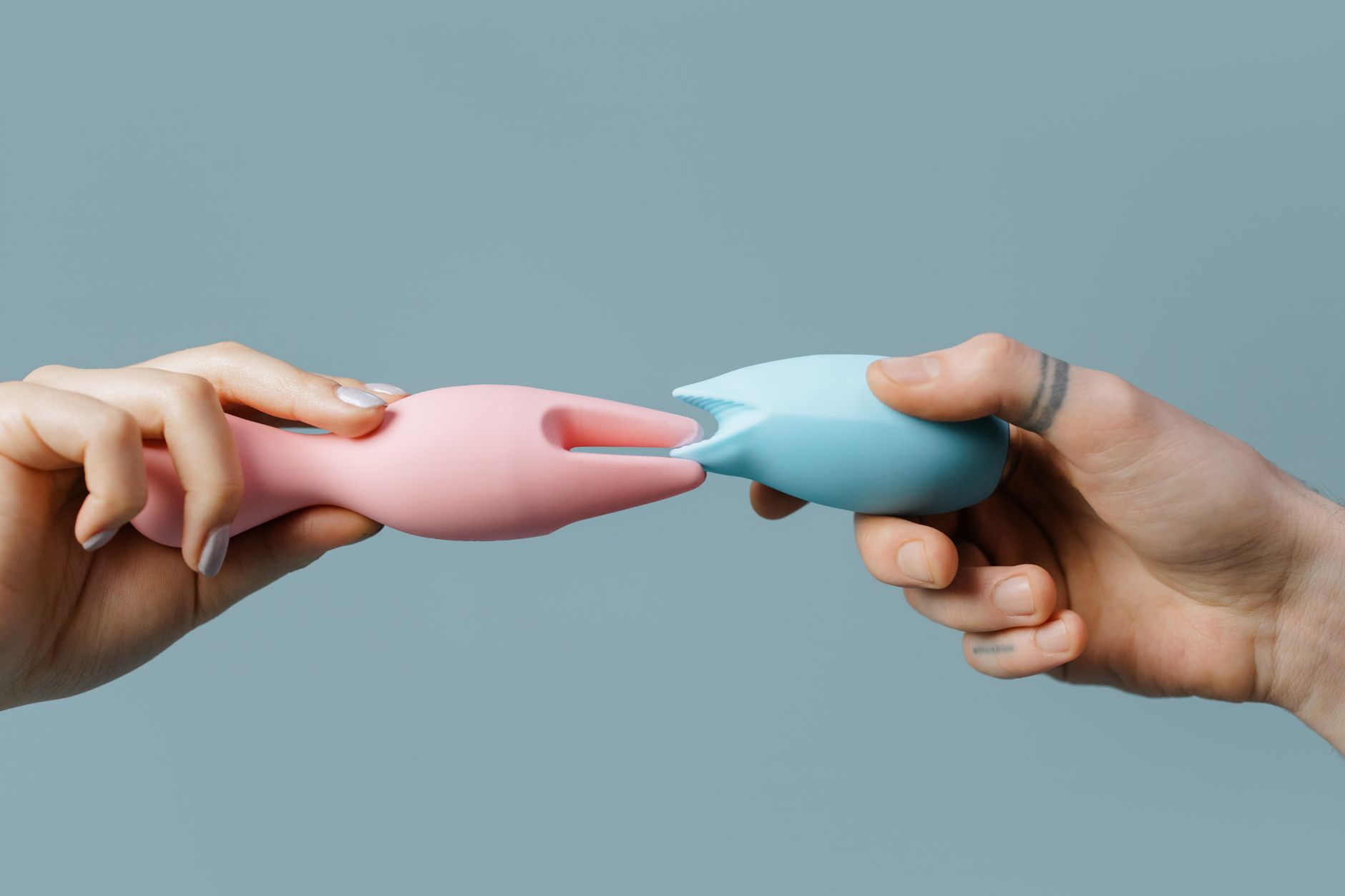
During partnered sex, penetration-focused toys can feel like you're replacing your partner with a machine. That's not always rational, but it's a real feeling some people carry. A clitoral vibrator like the Lem from Hello Nancy Lemons is a completely different category. It's not replacing anyone. It's adding something specific.
Clitoral suction toys are also less intimidating as a first shared toy because they work differently than traditional vibrators. There's no high-speed buzzing that makes you both feel like you're trying to perform. There's actual sensation, but it's gentler entry than a full-power wand vibrator would be. The Lem specifically uses gentle suction, which means there's less noise, less obvious mechanical vibe, and more room for actual interaction.
Start with settings 1 or 2. Full intensity feels like you're testing a power drill. Low intensity feels like exploration.
The first time needs a different setup
Do not use this as your primary method of sex the first time. That puts too much pressure on the toy to "work" and too much performance anxiety on both of you.
Instead, use it as part of foreplay. Build arousal for 15 or 20 minutes however you normally would. Then introduce the toy when you're already turned on. This means the pressure is already there. The toy just amplifies what's already happening. That's a much easier mental frame than "the toy is supposed to make this happen."
One partner uses it while the other partner provides other touch. Kissing. Hands. Attention. The toy becomes one part of a whole experience, not the whole experience. This keeps both people connected and engaged instead of one person feeling like they're operating equipment.
Managing the weird feelings during
Something that helps: narrate what's happening without being clinical. "That feels good." "I like watching you." "This is nice." Short, warm, real. Narration during sex does two things. It breaks the performance pressure (you're talking, which means you're present, which means you're not in your head) and it keeps you connected.
Also know that the first time might not be mind-blowing. First times with anything new are usually 40 percent logistics, 30 percent novelty, and 30 percent actual pleasure. That's fine. It's a learning experience. The second time is usually better because you know how the thing works and you're less in your head about it.
If you feel uncomfortable during, you get to pause. You get to say, "Can we take a break?" That doesn't mean the whole thing failed. It means you're being respectful of your nervous system. That's actually the foundation of good partnered sex.
What to do if one of you really isn't into it
Sometimes you try it and one partner feels weird about it. That's allowed. You're not obligated to use it just because you bought it.
The conversation after is important. "That wasn't for me, but I appreciate that we tried it together." Or, "I got in my head a bit. Can we try again in a few weeks?" Or honestly, "I don't think toys are my thing, and that's okay."
The goal is not to convince your partner to like something. The goal is to try something together and see what actually works for your specific dynamic. Some couples love sharing toys. Some couples find that partnered exploration looks completely different. Both are right.
When things do click
When the awkwardness finally dissolves, there's usually a moment where you both realize this is actually just another way to connect. It's not performance. It's not weird. It's just pleasure. You're both adults. You both want this. The toy is just a tool.
That's when the second time, the third time, the ongoing conversation becomes easier. You've moved through the initial barrier. You know what you like. You know what your partner responds to. From there, exploring different settings and patterns becomes natural curiosity instead of anxious experimentation.
For couples navigating this transition, I also recommend checking out resources on how partners can navigate shared exploration so both of you feel less alone in the awkwardness.
The bigger picture
Using a lemon vibrator or clitoral suction toy together isn't actually about the toy. It's about being willing to be a little vulnerable with your partner. It's about saying, "I want to explore pleasure with you, and I'm willing to be awkward while we figure it out." That willingness is what actually changes things.
The awkwardness is temporary. The conversation skills you build while moving through it? Those stick around. And those skills transfer to every other conversation that matters in a long-term partnership.
Start small. Start honest. Start with curiosity instead of performance. Everything else follows.
People also ask
How do you introduce a clitoral vibrator to a partner without it feeling like criticism?
Frame it as addition, not replacement. Say something like, "I've been curious about trying this together," not "I need this to finish." The goal is partnership exploration, not fixing something broken. You're also setting the tone by bringing it up with genuine interest rather than frustration or need. Partners can usually feel the difference.
What if your partner feels threatened by a sex toy?
That's worth a deeper conversation about what the threat actually is. Often it's not about the toy itself. It's about feeling like they're not enough, or like they're losing something, or like they're being replaced. Those are feelings that deserve acknowledgment and conversation outside the bedroom first. Once you understand what's underneath the hesitation, you can address that thing directly instead of arguing about the toy.
Should you use a toy the first time you have sex with a new partner?
Generally, no. Build comfort and trust first. Most new partners appreciate moving slowly anyway. A lemon vibrator or any toy is easier to introduce once you've already established what you both like and how you like being touched. By then, introducing a toy is just, "Hey, I want to try this with you," not a surprise.
How do you know if your partner is genuinely interested or just saying yes?
Watch for full-body cues. Are they engaged? Are they laughing? Are they touching you? If they're quiet or stiff or checking their phone, they're probably not fully into it. The best thing to do is pause and ask directly. "Are you actually into this, or are you doing this for me?" Most partners appreciate being asked because it gives them permission to be honest.
What if the toy makes one partner finish too quickly and the other partner feels left out?
This is a timing and communication issue, not a toy issue. Some people respond intensely to clitoral stimulation. That's not wrong. It just means you need to build in more foreplay before using the toy, or take breaks so both partners stay synchronized. You can also use the toy as part of partnered pleasure rather than a solo tool. One person holds it while the other provides other touch. That keeps the experience connected.
Is it better to use a lemon vibrator or a traditional vibrator with a partner for the first time?
Clitoral suction toys like the Lem tend to feel less intimidating because they're not a high-speed mechanical buzz. They're gentler, quieter, and feel more like partnered play. Traditional vibrators can work too, but start on low settings. The goal is exploration, not intensity.
References
Gottman, J. M., & Silver, N. (2015). The seven principles for making marriage work: A practical guide from the country's foremost relationship expert. Harmony.
Perel, E. (2017). The state of affairs: Rethinking infidelity. HarperCollins.
Cook, D. R., & Rosser, B. R. (1992). Intoxicants and sex: Pharmacological considerations. In Volberding, P. A., et al., The AIDS knowledge base (2nd ed.). Medical Publishing.
Meston, C. M., & Frohlich, P. F. (2000). The neurobiology of sexual function. Archives of General Psychiatry, 57(11), 1012-1030.