Let's be real about the orgasm plateau
You know the feeling. The buildup is incredible. Your body's climbing, intensity's rising, everything feels like it's about to crest. Then somewhere around 70 or 80 percent, it just...flattens. You're stuck in this intense but unchanging zone. You can stay there indefinitely, but you can't seem to push past it into actual climax.
This is the orgasm plateau, and it's not a failure on your part. It's a neurological wall, and understanding it changes everything.
What's actually happening in your nervous system
Your clitoris has roughly 8,000 nerve endings packed into a space smaller than a pea. When you stimulate it, those nerves fire in a cascade. At first, each new stroke or pattern change sends a jolt of novelty to your brain. That novelty is fuel. Your arousal builds because your nervous system keeps receiving new information.
But here's where most people get stuck. Once your body reaches a certain threshold of arousal, those same nerve endings start adapting to the stimulus. They've fired the same signal 500 times in 30 seconds. Your brain stops registering it as novel information. Neurologically, it becomes background noise.
This is called sensory adaptation, and it's not unique to sex. It's why a constant sound stops bothering you or why you stop noticing a smell after you've been in a room for five minutes. Your nervous system is designed to tune out repetitive input so it can focus on new threats and opportunities.
For clitoral pleasure, repetitive input is your enemy right before orgasm.
Why intensity alone doesn't break the plateau
Your instinct is probably to turn the vibrator up. Make it stronger, faster, more aggressive. And sometimes that works, for a minute. But here's what's actually happening when you crank the dial: you're adding volume to the same signal. You're not adding novelty.
Your nervous system still recognizes it as the information it's already tuned out. It's like shouting the same word louder. Your brain still isn't going to hear it as new information.
This is why people often report that the highest settings on their vibrator don't feel any more pleasurable than medium settings. They've hit the adaptation wall, and sheer power can't break through it.
The breakthrough: pattern variation and micro-pauses
Now here's where lemon vibrators, particularly suction-based lemon clitoral vibrators, become genuinely useful tools. The Lem by Hello Nancy has multiple intensity patterns, not just intensity levels. This is the distinction that matters.
A pattern is a sequence of stimulus changes. Instead of steady vibration, you get rhythm: pulse, hold, double-pulse, wave. Your nervous system perceives each new pattern as novel information. It resets the sensory adaptation clock.
Here's what to do when you hit a plateau:
First, stay at your current intensity level. Don't increase it. Your nervous system is already adapted to that strength. What it's not adapted to is a change in the rhythm itself.
Second, switch patterns. If you've been on pattern 2, move to pattern 4 or 6. Give your nerves something genuinely different to respond to. The sensation changes immediately because the rhythm has changed, not just the intensity.
Third, use micro-pauses strategically. Complete removal of stimulus, even for 3 to 5 seconds, essentially resets sensory adaptation. Your nerves get a tiny break, and when stimulation resumes, they fire with fresh responsiveness. This is why edging, in its truest form, isn't just about holding back climax. It's about deliberately cycling stimulus on and off to keep your nervous system engaged.
Why the Lem's suction mechanism breaks plateaus differently than traditional vibration
Traditional vibrators typically pulse at a fixed frequency. Air-suction toys like the Lem operate on a completely different principle. The suction creates a gentle vacuum and release cycle. This feels different on clitoral nerve endings than direct vibration does.
What this means practically: if you've been using another toy and hit the plateau wall, switching to a lemon sucker, specifically a Hello Nancy lemon clitoral vibrator, literally changes the type of stimulation your clitoris is receiving. The novelty alone can be enough to break the plateau.
Even if you stay within the Lem's own settings, the rhythm patterns interact with the suction mechanism in a way that feels quite different than pure vibration. Pattern 1 on a suction tool doesn't feel like pattern 1 on a traditional vibrator.
The mental piece nobody talks about
But here's the thing that trips people up. Even with the right tool and the right technique, if your brain is anxious about whether it'll work, your parasympathetic nervous system won't engage fully. Your pelvic floor will stay slightly tense. Your breathing will be shallow. Your clitoris will be responsive but defended.
The plateau often isn't just physical adaptation. It's also psychological tension dressed up as sensation. You're at 75 percent arousal, and some part of you is thinking, "Is this going to happen? Am I going to get stuck here? What if this is as good as it gets?"
That internal commentary literally prevents you from crossing the threshold. Your nervous system is partially redirected toward doubt.
What helps: breathe deeply. Long inhale, longer exhale. This activates your parasympathetic nervous system, which is the "rest and digest" response your body needs for orgasm. Stop monitoring whether climax is happening and just focus on the sensation itself. If orgasm comes, it comes. If you stay in the plateau zone for a while and then it arrives, that's not failure. That's exploration.
When the plateau is actually a sign to slow down
Sometimes the plateau isn't a wall to break through. Sometimes it's your body asking you to shift gears entirely.
If you've been going hard for 20 or 30 minutes and the plateau feels tired rather than exciting, your nervous system might be fatigued. Continuing to chase intensity isn't going to help. Instead, slow everything down. Drop the intensity significantly. Widen your focus from just the clitoris to the whole vulva, inner thighs, lower belly. Let arousal rebuild from a lower baseline.
This isn't a failure either. It's actually a form of sensory reset that often works better than pushing harder.
The practical sequence that works most often
When you hit that 70 percent zone:
Step one: Acknowledge it without judgment. "Okay, I'm in the plateau. This is normal."
Step two: Keep intensity the same, change the pattern. Spend 30 to 45 seconds with the new rhythm.
Step three: If it still feels flat, introduce a micro-pause. Stop stimulation for 3 to 5 seconds, then resume at a slightly different intensity level. The contrast itself becomes stimulating.
Step four: Add depth to your breathing. This shifts your nervous system state and often releases the muscular tension that holds you in plateau.
Step five: If nothing shifts after a few cycles, slow down entirely and widen your focus. Come back to the intensity buildup from a calmer baseline.
Most of the time, one of these interventions moves you past the wall. Sometimes it takes a combination. Patience with your nervous system beats impatience every time.

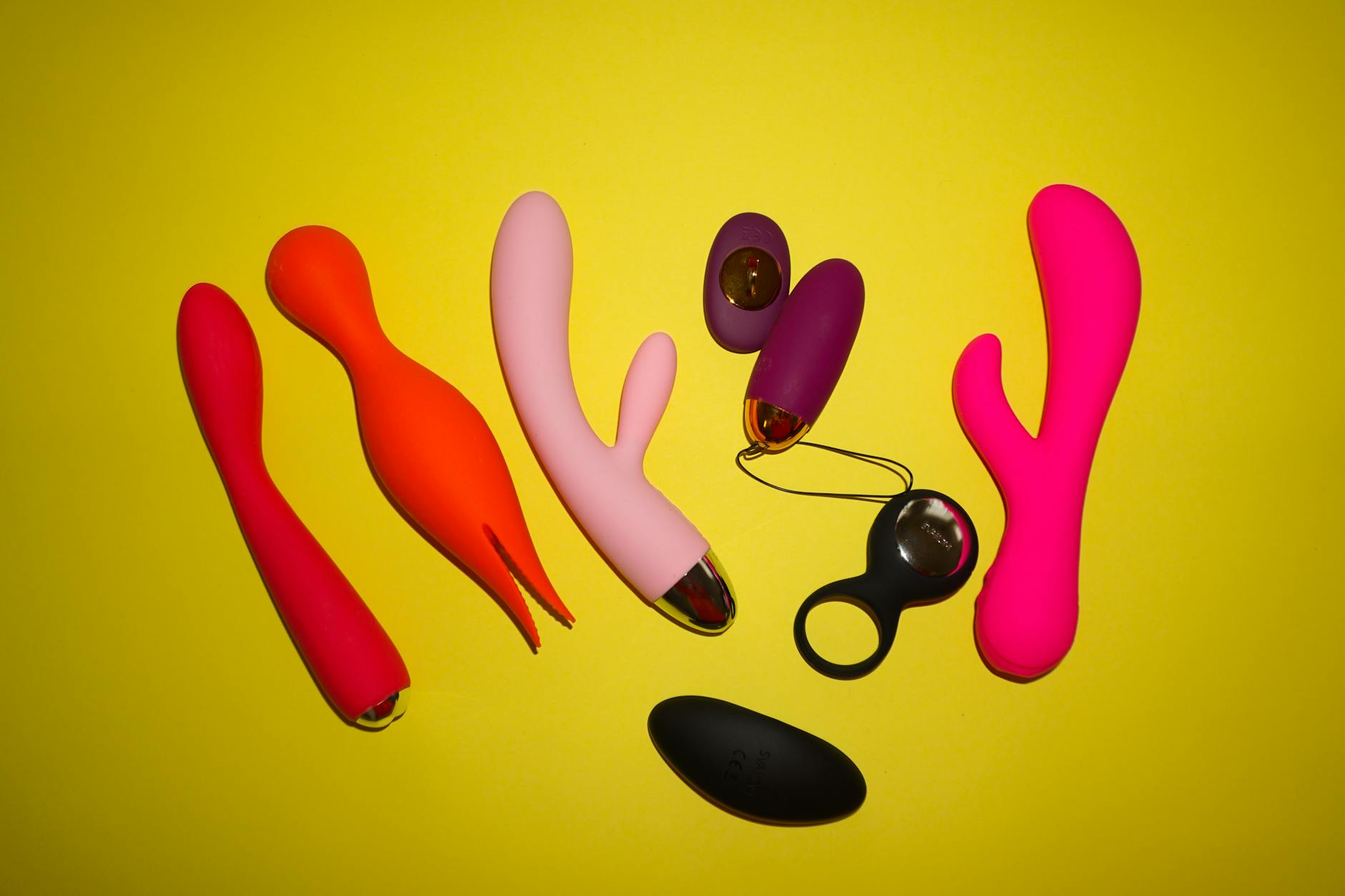
Photo by Frank Schrader on Pexels
Understanding sensory adaptation so you can work with your body
The reason this matters is that once you understand sensory adaptation, you stop blaming yourself for plateaus. They're not happening because you're doing something wrong or because your body is broken. They're happening because your nervous system is doing exactly what it's designed to do: tune out repetitive input.
Knowing this, you can work strategically instead of desperately. You can vary patterns intentionally. You can use micro-pauses as a technique rather than a frustration. You can trust that your clitoris still has plenty of capacity for pleasure; it just needs novelty to access it.
One more thing: the plateau isn't just about reaching climax. Some people find they actually prefer staying in that 70 to 80 percent zone for extended periods. It's intensely pleasurable without the urgency of approaching orgasm. That's completely valid. The goal isn't always to have an orgasm. Sometimes the goal is just to feel good, which is exactly what the plateau offers if you stop fighting it.
FAQ: Orgasm plateaus and breakthrough strategies
What's the difference between a plateau and a dead zone?
A plateau is high arousal that's not escalating. You feel good, you're engaged, but nothing's changing. A dead zone feels numb or disconnected entirely. If you're in a dead zone, the issue is usually desensitization from too many sessions or from using a toy that's too intense for your current nervous system state. A plateau is your body saying, "I need novelty, not intensity."
Can you have an orgasm from the plateau, or do you have to break through it?
You can have an orgasm directly from the plateau, especially if you've learned to relax into it rather than fight it. Some people find that the longer they rest in the plateau, the more it gradually builds into climax. Others find they need to actively break through it with pattern changes or pauses. Both are real pathways. The "best" one is whatever your body responds to.
Do all vibrators hit the plateau wall, or is it specific to certain toys?
All toys with consistent stimulus will eventually trigger sensory adaptation. The difference is how quickly they get you there and how easy it is to vary the stimulus once you're there. Toys with multiple patterns, like lemon clitoral vibrators from Hello Nancy, give you more built-in variation so you can break through more easily. That said, you can work with almost any toy by using manual pauses and speed variation.
Is the orgasm plateau the same as the arousal plateau described in the Masters and Johnson research?
They're related but not identical. The classic arousal plateau is the phase where arousal stays high but doesn't escalate, preceding orgasm. What we're talking about here is getting stuck before you reach the involuntary muscular contractions that define orgasm. You're in arousal plateau, but you're not triggering the reflex that leads to climax. Understanding the neurological adaptation piece helps you move from the plateau into actual orgasm.
If I'm hitting plateaus every time, is something wrong?
Not necessarily. Frequent plateaus might mean your baseline stimulation isn't varied enough, or you might be using the same toy in the same pattern repeatedly. Try mixing up which toy you use, experiment with pattern variation, and make sure you're giving your nervous system breaks between sessions. That said, if plateaus are accompanied by pain, numbness, or a complete inability to climax after several attempts, mention it to your healthcare provider. Most of the time, though, plateaus are just your body asking for novelty.
How long should you stay in a plateau before deciding it's not moving toward orgasm?
There's no hard rule. Some people stay contentedly in the plateau for 20 or 30 minutes without chasing climax. If you're trying to reach orgasm, I'd say spend 2 to 3 minutes experimenting with pattern changes and breathing shifts before deciding to slow down or take a break. Forcing it rarely helps. Your body will let you know when it's ready or when it needs a reset.
The bigger picture: your nervous system is smarter than you think
The orgasm plateau isn't a bug in your body's design. It's a feature of how human nervous systems work. Once you understand that, you stop seeing it as failure and start seeing it as information. Your body's telling you it needs something different. Listen to that signal, and the plateau becomes a launching point instead of a wall.
If you're curious about how to choose the right tool for your body and your pleasure patterns, we have a guide on choosing a lemon vibrator versus other clitoral toys when you're overwhelmed by options. Understanding your nervous system also helps when you're rebuilding sensation if your vibrator feels less intense over time.
Your pleasure matters. That's not just a nice thing to say. It's literally why your nervous system is designed to seek novelty and reward you for it. Work with that design, and orgasms become less about performance and more about genuine sensation.