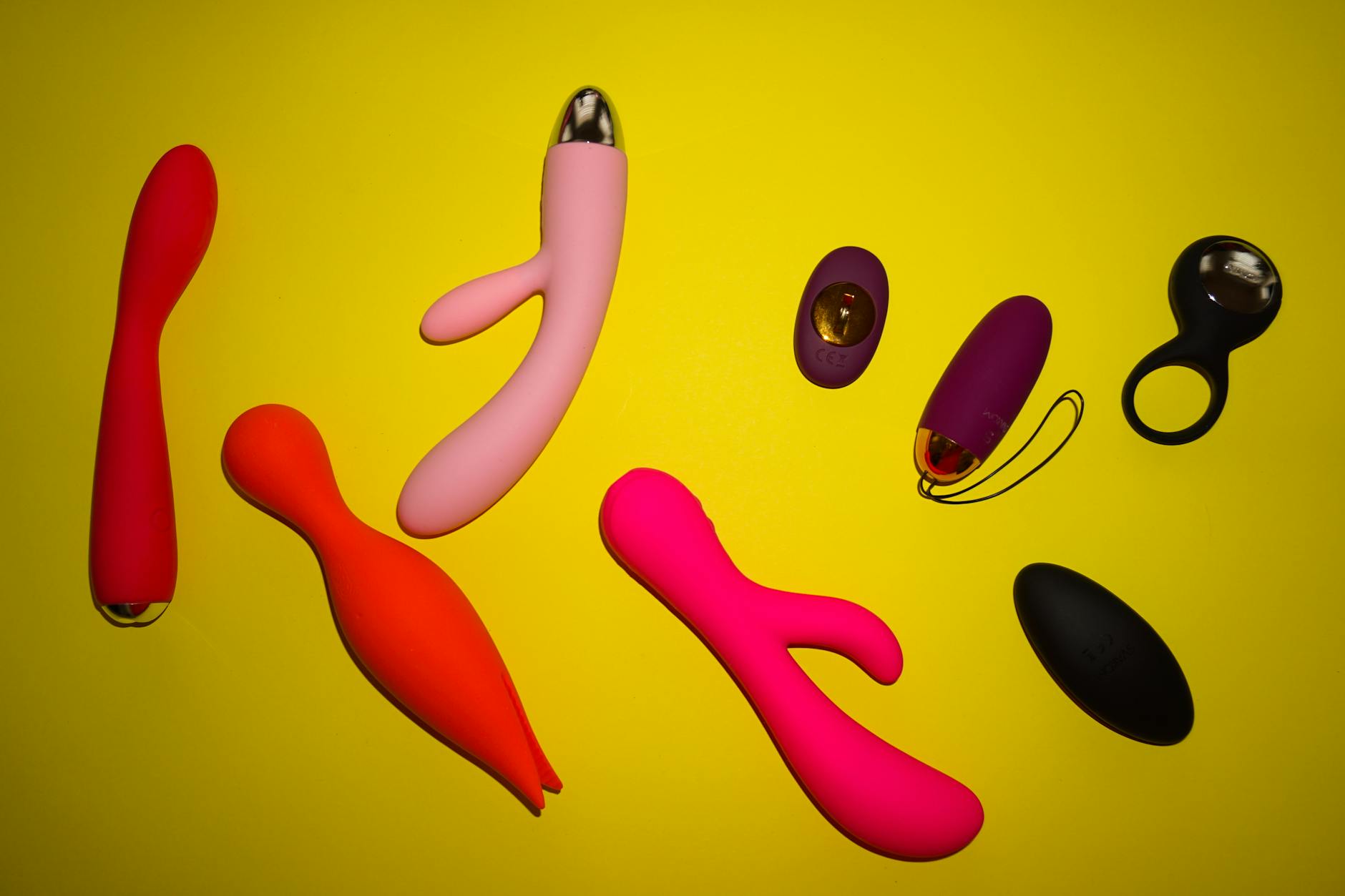
Let's talk about solo play without the asterisk
Honestly, the thing nobody tells you is that your solo pleasure matters more than your partnered pleasure. Not more in a ranking sense. More in a foundational sense. You can't give your partner access to something you've never found yourself. And yet most conversations about vibrators start and end with partnered sex. Which means the person trying to figure out what they actually like is flying blind.
Here's what changes when you're alone with a lemon vibrator.
Why solo play feels different (and why that's the point)
When you're with a partner, your brain is multitasking. You're monitoring their experience, timing your responses, managing performance anxiety, checking the room temperature. There's a reason therapists call this "spectating." You're watching yourself instead of inhabiting yourself.
Solo play dismantles that. No one's watching. No one's timing you. No one's expecting a specific outcome. This sounds simple until you actually experience it. The difference between performing pleasure and actually feeling it is enormous.
A lemon vibrator accelerates this because the stimulation is consistent and precise. You're not negotiating rhythm or pressure with anyone else's body or preferences. You're meeting your own nervous system exactly where it is, exactly as fast or slow as you need.
Building your solo ritual (it doesn't have to look any particular way)
The best solo practice is the one you'll actually do. So start boring.
Set aside 20 minutes when you won't be interrupted. Bedroom, bathroom, locked door. Your vibrator, water-based lube, your phone on silent. That's it. You don't need candles or music unless those things genuinely relax you. You don't need to be dressed a certain way or feel a certain mood first.
One of the biggest myths is that arousal has to arrive before you start. It usually arrives during. Many people find that starting with lower patterns on the Lem and giving their body 5-10 minutes to wake up creates more consistent, deeper sensation than waiting for spontaneous arousal.
The structure matters less than the consistency. Same time, same space, same lack of interruptions builds a pattern your body recognizes.
What to do with speed and pressure settings
Most people default to high. This is a mistake. Start at pattern 1 or 2. Let your body tell you when it wants more.
As you explore, you'll notice that arousal lives in the sensation changes. Your body isn't interested in "constant intensity." It's interested in contrast. Which means varying your patterns during a session produces more intense sensation than staying on one speed.
If you get close and plateau, instead of going harder, try lighter. Or switch the pattern. Weirdly often, backing off the gas rescues the moment.
For people using a lemon vibrator solo for the first time, I usually suggest: 10 minutes of foreplay with yourself (this means touching your body, getting present, noticing where sensation lives), then 5-10 minutes with the Lem on lower patterns, then permission to adjust as you discover what your body actually wants. No timeline. Pleasure isn't efficient.
The mental game (which is 90 percent of this)
Solo play is where guilt usually shows up. Maybe you were taught that masturbation is selfish. Maybe you're partnered and you feel like you should be satisfied by partnered sex alone. Maybe you're worried about dependency (spoiler: you won't become dependent on a vibrator any more than you'll become dependent on a shower).
All of that shame is real. And also, it's the thing between you and your own pleasure.
Here's the reframe that actually works: solo play is research. You're not choosing yourself over your partner. You're gathering information about your own body so you can be a better, more present, less resentful partner. You're figuring out what you like so you're not asking your partner to guess. You're proving to yourself that you deserve pleasure, which is the foundation of everything else.
If that still feels uncomfortable, start smaller. Use your vibrator for foreplay before partnered sex. That way you're warming up your nervous system, reducing performance pressure in the partnered moment, and starting to build a relationship with your own body. This is not selfish. This is collaborative.
How to use a lemon clitoral vibrator when you're discovering your own patterns
Your orgasm signature is unique. Some people need pressure, some need light touch. Some need rhythm building, some need the vibration to surprise them. Some orgasm quickly, some need 20 minutes to get there.
The only way to know is solo exploration. With a partner, you're managing timing and reciprocity. Alone, you get to be selfish in the best way.
When you're using a lemon vibrator solo, notice what your body does when something works. Do you tense your pelvic floor or relax it? Do you want the vibrator still or moving? Do you want suction or direct vibration? Does your pleasure live in one spot or do you like to move the vibrator around? Do you come once and stay interested, or does arousal drop after orgasm?
None of these answers are "right." They're just data. And that data is the entire point of solo play.
When to use solo play in a partnered context
Here's a honest thing: some people use solo play as an escape hatch from partnered sex. If you're doing that, that's worth examining. But most people find the opposite. Regular solo play makes partnered sex better because you know what you actually want, you're less performance-anxious, and you've proven to yourself that pleasure is something you deserve.
You can also use solo play as foreplay. Spend 10 minutes with your lemon vibrator, get yourself to 80 percent arousal, then invite your partner in. Your nervous system is already engaged. Your body is already warm. The pressure to get "ready" is gone. This changes partnered sex for a lot of people.
Some partners find it hot to watch. Some people enjoy the vulnerability of saying "I want to use my vibrator first and then you can touch me." Both are valid.
FAQ: Solo Play and Lemon Vibrators
How often should I use my lemon vibrator for solo play?
As often as feels good. Some people do this daily, some weekly, some sporadically. There's no optimal frequency. The only answer is the one that keeps you interested and connected to your own body. If you're using it compulsively to escape difficult feelings, that's worth looking at. If you're using it as regular self-care, you're doing exactly right.
Will using a vibrator alone make partnered sex feel less satisfying?
No. The opposite is true for most people. Solo play teaches you what kind of stimulation works, which makes you a better communicator in partnered sex. You also reduce performance anxiety because you've already proven you can orgasm. Your brain is less in "prove something" mode and more in "enjoy this" mode.
Should I tell my partner I'm using a vibrator solo?
That depends on your relationship and your comfort level. Some couples are totally transparent. Some keep solo play private. Neither is wrong. But if you're keeping it secret because you're ashamed, that's worth examining. Your pleasure matters. Your partner probably wants you to feel good. If there's shame in the way, talking about it helps more than hiding.
Is it normal to feel awkward or embarrassed the first time?
Completely. You're in your own space doing something that's culturally been treated as taboo or embarrassing. Take that seriously. Set up your environment in a way that feels good. Use lube. Give yourself permission to feel weird at first. By the third or fourth time, most people feel significantly less awkward.
How does using a lemon vibrator solo change what I want from partnered sex?
Often, you realize you want more of what actually feels good, and less of what you thought you were supposed to want. You might realize you want more foreplay. Or more direct clitoral stimulation. Or less performance pressure. You might discover you like combining solo vibration with partnered touch. The point is, you get to make those calls from experience, not from guessing.
What if I can't orgasm alone even with a vibrator?
That's common, especially at first. Performance pressure doesn't disappear just because no one else is watching. You might orgasm more easily partnered. You might need a much longer exploration period. You might discover you prefer sensation and pleasure that doesn't lead to orgasm. All of that is fine. Solo play is about connection to your body, not necessarily about reaching a finish line.
The real point
Solo pleasure is how you learn to trust yourself. It's how you figure out what you actually like instead of what you think you should like. A lemon vibrator makes that exploration easier because it's designed for precision and consistency. But the real tool is permission. Permission to spend time on your own pleasure. Permission to be selfish about sensation. Permission to not perform for anyone, including yourself.
That permission is how you become someone who actually knows what they want. And that person is so much better at relationships, sex, and everything else.
If you're ready to start exploring, reach out to our team if you have questions about which Hello Nancy Lemons product might work for your needs, or check out our buying guide for a full breakdown of what's available.