Let's start with what usually goes wrong
One partner buys a toy, hides it in a nightstand, and introduces it mid-session without warning. The receiving partner feels ambushed, or doubts themselves. The buying partner feels rejected when their gift isn't met with gratitude. Both people feel awkward. The toy lives in that nightstand, unused, as a symbol of the conversation they never had.
This is the most common path. And it doesn't have to be yours.
Why a lemon vibrator can deepen connection
A lemon clitoral vibrator is not a replacement for your partner. It is not an insult. What it actually is, when used right, is a invitation. An invitation to explore pleasure together without shame, to communicate about what feels good, and to admit that desire is more complex than most of us learned growing up.
When couples introduce a toy the right way, they report three consistent changes. First, they talk more explicitly about sex. Second, they feel more adventurous together. Third, they realize their partner wanted pleasure for them, not instead of them. That shift in understanding, that moment when you feel genuinely cared for instead of replaced, changes the whole dynamic.
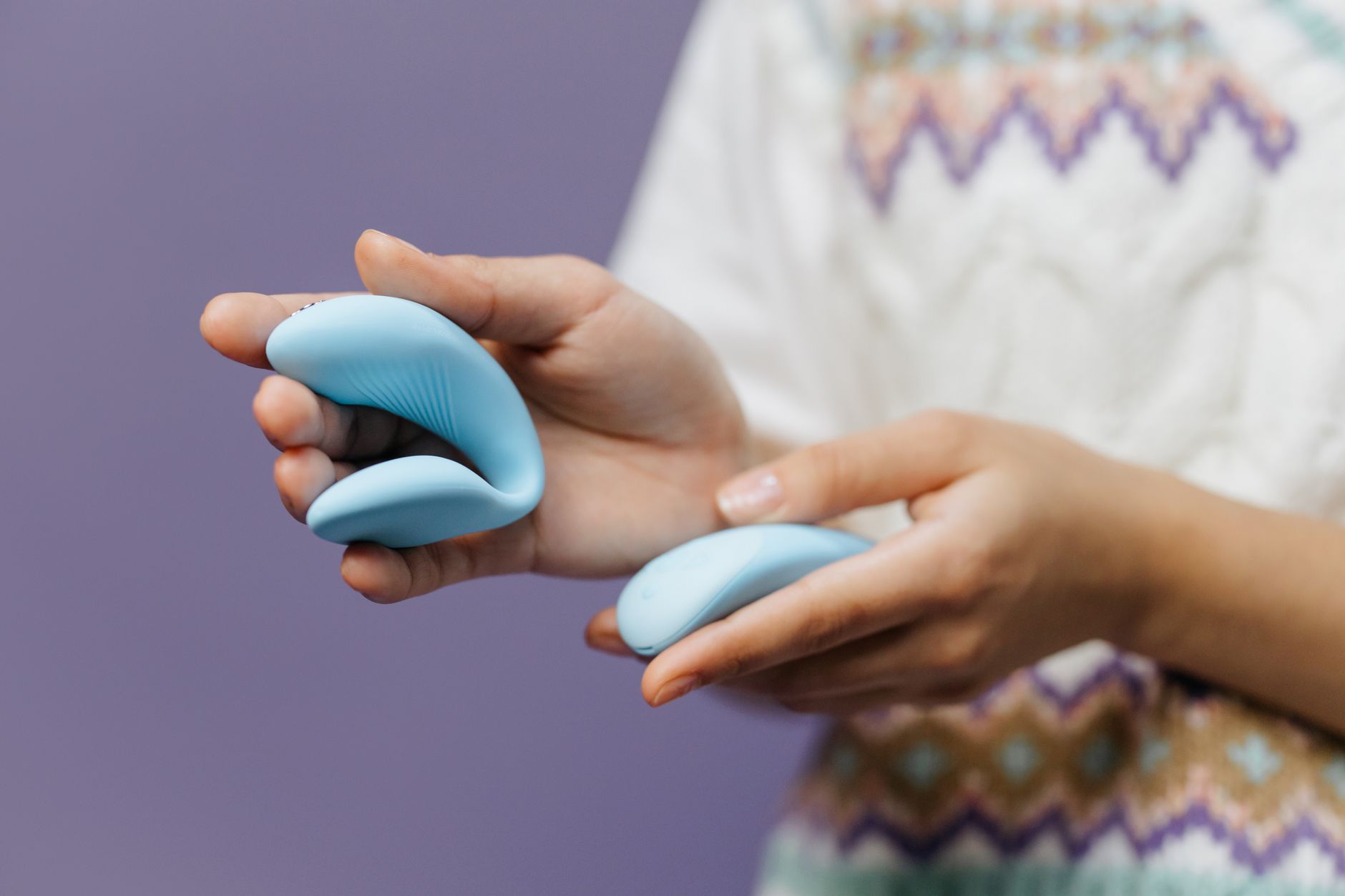
The lemon vibrators work particularly well for couples because they're intuitive and non-intimidating. The suction pattern feels gentler than some toys, which means it's easier for a receiving partner to stay present instead of bracing for intensity.
How to bring it up without it becoming a whole thing
The conversation doesn't need to be a "State of the Union" sit-down. It can happen during a normal conversation, something like: "I was reading about how some couples use vibrators together, and I thought it might be fun to try. Would you be open to that?"
That's it. You're not confessing a secret. You're not saying anything's wrong with them or with your sex life. You're saying you want to explore something together.
If your partner says no, the answer is no. Pressure kills desire and trust in equal measure. But most people who say no say it because they're scared, not because they actually don't want to. The fear is usually one of three things: they think it means they're not enough, they worry it's weird or kinky in a way they're uncomfortable with, or they don't know how to use a toy and feel embarrassed.
If they express one of these fears, you can reassure them specifically. "This isn't about you not being enough. I want to explore this with you because I want more pleasure, and I think you do too." Or: "A lemon vibrator is basically a clitoral vibrator that uses suction instead of buzzing. A lot of couples use them. It's not extreme, it's just another way to feel good."
Wait for genuine buy-in before you move forward. A reluctant yes is not the same as enthusiasm. Enthusiasm is what makes this work.
Choosing the right moment to introduce the actual toy
Don't ambush them with it during sex. Do show it to them before you have sex, ideally in a moment when you're both relaxed and clothed and neither of you is already aroused. You want them to feel it in their hands, understand what it does, and ask questions. Some partners want to see it in person before they even think about using it together.
Talk about when you might use it. "Next time we have sex, would you want to try it during foreplay?" or "I'd like to use this on myself while you're inside me, if that sounds good." Specificity removes mystery, which removes anxiety.
If they're nervous, suggest they watch you use it on yourself first. That way there's no performance pressure on them. They get to see how it works, how your body responds, what pleasure looks like. Most partners find that watching is actually the hottest part. When they see their partner feeling good, something shifts in them too.
The mechanics of using it together
If a clitoral vibrator is new to your partner, they might worry they'll hurt you, apply too much pressure, or do it "wrong." The beauty of a lemon vibrator is that it's pretty hard to do wrong. The suction does most of the work.
Start at the lowest setting. Show them where to place it (directly over the clitoris or nearby, depending on what feels good for you). Tell them what good feedback sounds like: "Higher, lower, slower, faster" are all useful. But equally useful is "That feels amazing." Partners need permission to be selfish about their own pleasure. If your partner knows you're feeling good, they relax. Relaxed partners are better partners.
You can use a lemon clitoral vibrator during partnered penetration too. Some couples find that adding external stimulation during penetration creates a completely different kind of orgasm. It's worth exploring if that's something you both want.
The first time might feel a little awkward. You're thinking about how you feel, how they feel, what they're thinking about how you feel. That's normal. By the second or third time, the self-consciousness usually fades.
What to do if it doesn't work the first time
Maybe the stimulation felt too intense. Maybe someone got in their head. Maybe the timing was off and nobody was quite aroused enough. This is all normal and says nothing about whether the experiment will work long-term.
The key is to have a debrief conversation after, not during. "That felt different than I expected" or "I got a little in my head" are valuable pieces of information. "I loved that" is equally valid. You're gathering data about what actually feels good.
The second attempt is almost always easier because you both know what to expect. Anticipatory anxiety drops. Pleasure rises. Many couples report that the third time is when it actually clicks.
The deeper conversation underneath
What you're really doing when you introduce a lemon vibrator together is practicing honest communication about desire. You're saying: "I want to talk about what feels good, and I want you to want that too." You're admitting that pleasure is complex and sometimes requires tools or conversation. You're normalizing the idea that desire evolves and that's okay.
Some couples discover that the toy becomes a regular part of their intimacy. Others use it occasionally. Some find they prefer a different toy, or no toy at all, and that's equally fine. The point is not to end up using the toy. The point is to end up with a partner you can talk to about sex without shame.
If you find you're struggling to have this conversation even after wanting to, or if there's a deeper disconnect underneath the toy question, that's actually important information too. Sometimes what feels like "my partner won't try a vibrator" is actually "my partner and I can't talk about sex without defending ourselves." That's a different problem, and it usually needs more support than a toy can provide. A couples therapist or relationship counselor who specializes in intimacy can help you build that communication foundation.
How to have fun with it instead of making it serious
Couples often treat introducing a toy like a major life decision. It's not. It's an experiment. You're trying something and seeing if you like it. If you do, great. If you don't, you move on.
One way to lower the stakes is to frame it playfully from the start. "I want to try something that might be really good or might be completely hilarious" gives both of you permission to laugh if something awkward happens. And something awkward probably will happen. Someone's hand will get in the way, or the angle will be wrong, or you'll both giggle because you feel self-conscious. That's fine. Sex is supposed to have some humor in it.
You might also talk beforehand about what you're each hoping for. One person might want deeper physical pleasure. Another might want to feel less performance pressure. Another might just want to try something new with someone they trust. Those are all good reasons.
When couples use a toy together, what changes most is not the sex itself. It's the permission both people give themselves to want more.
When to bring in more support
If you've talked about using a lemon vibrator and your partner has made it clear they don't want to, the respectful move is to drop it. Using the toy alone is still an option. Bringing it up again and again will only create resentment.
If you've tried it together a few times and it's not working, that's different. You can troubleshoot. Are you using it at the right time in your arousal cycle? Is the intensity off? Do you need longer foreplay beforehand? Is there an unspoken anxiety one of you is carrying that needs to be named?
If the conversation keeps stalling or both of you feel stuck, that's when bringing in a sex-positive therapist or couples counselor makes sense. They can help you figure out what's underneath the resistance and give you tools for having harder conversations.
FAQ
How do I know if my partner will be open to using a lemon vibrator together?
You don't know until you ask. Most partners are more open than you'd expect. If they grew up without parents who talked about pleasure or sexuality, they might be nervous. But nervous isn't the same as unwilling. A simple, shame-free question usually gets an honest answer. "Would you be interested in trying this together?" doesn't require a big production.
What if my partner feels threatened by a vibrator?
That feeling usually comes from a belief that you'll need them less, or that the toy means something's wrong with them. Reassurance helps, but actions matter more than words. Using the toy while they're touching you, or while they're inside you, sends the message that this is an addition, not a replacement. You can also explicitly say: "I want you to use this on me." That flips the framing from "toy replaces partner" to "partner and I exploring together."
Is using a lemon vibrator during partnered sex different from using it alone?
Yes. When someone else is holding it or when you're using it while they're also inside you, the sensation is different. The build feels different. The orgasm often feels different too. Many people report that adding a lemon clitoral vibrator during partnered penetration creates an intensity they can't achieve alone. Other couples find it's too much stimulation. You won't know until you try.
How do I bring this up if we haven't talked about sex much?
Start small. You don't need to have a grand conversation first. The conversation can literally start with the toy. "I found this and I think we should try it together" is a complete sentence. If your partner asks why, you can say something like "Because I want us to feel more pleasure together" or "Because I'm curious and I trust you." Those are both true and both sufficient.
What if we've been together for years and suddenly introducing a vibrator feels awkward?
It's actually common to feel more awkward after years together. You've built routines and assumptions about how things work. A new tool disrupts that. But that disruption is the point. You're breaking a pattern that might have become comfortable but not satisfying. The awkwardness usually fades quickly when both people are genuinely curious. If it doesn't, talking about why the awkwardness persists is the real conversation you need.
Can using a lemon vibrator help if we've drifted sexually?
It can be part of rebuilding, but it's usually not enough on its own. Sexual drift usually signals deeper disconnection. A toy can be a bridge back to conversation and physical closeness, but the real healing happens when you both decide you want to be close again. The vibrator is a tool. The decision to reconnect is the actual thing that matters.
If you want to explore how to rebuild intimacy with a partner, consider reading about how to use a lemon vibrator when you want to build arousal slowly or reach out to contact us if you'd like to talk through your specific situation.
What comes after the conversation
Once you've talked about using a lemon vibrator together and you've actually tried it, something shifts. You've crossed a line. Not a shameful line. A line from "we don't talk about this" to "we do talk about this." That conversation is the real thing. The vibrator is just the vehicle.
Many couples find that once they've opened that door, other conversations become easier. They talk about what else they want. They ask for what feels good instead of waiting for their partner to guess. They realize that desire is not a fixed thing but something that can be cultivated and explored.
If introducing a lemon vibrator feels scary, remember that the scariest part is usually the imagination before the conversation, not the conversation itself. Once you've said it out loud, once you know what your partner thinks, the anxiety usually drops. You might get a yes. You might get a no. But you'll know, and you can move forward from there.
That's what connection actually is. Not perfect sex. Not toys or techniques or any single thing. It's two people willing to be honest about what they want and brave enough to ask for it.