
Let's name what's actually happening
You were all over each other for the first three months. Now, six months in, you're scrolling your phone while your partner hints at sex. You feel guilty. They feel rejected. Neither of you is wrong. This is just what happens when the neurochemistry of new love collides with the reality of actual partnership.
Here's what I see in my practice over and over: desire doesn't disappear because the relationship is failing. It disappears because the novelty chemicals (dopamine, adrenaline, noradrenaline) that flooded your system at the beginning have normalized. Your brain is saying, "Okay, this is safe now. We can relax." That safety is actually a sign the relationship is working. But it doesn't feel that way when you're lying there wondering if you've become asexual.
The biology behind the drop
When you first get together with someone, your brain is essentially on high alert. Uncertainty triggers dopamine. Mystery triggers it. The possibility of rejection triggers it. You're chemically primed to want sex because wanting reinforces bonding, and bonding feels like survival when everything is new.
About six to nine months in, that neurochemical cocktail starts to shift. If the relationship feels secure, your dopamine levels settle. You're no longer in constant anticipation. The predictability that makes you feel safe also makes you feel less aroused. Meanwhile, oxytocin (the bonding hormone) has increased, which actually increases emotional intimacy but not necessarily sexual desire. You've built trust. Your body has decided this person is safe. And safe feels a lot like bored, even though they're not the same thing.
Additionally, the physical repetition of sex with the same person can make it feel routine. The same foreplay pattern. The same positioning. The same ending. Your nervous system literally adapts to it. You need novelty or intensity or a different kind of stimulation to feel aroused. This isn't a character flaw. It's neurology.
Why this isn't about your relationship
I'm going to say this directly: if you felt desire during the first months and now you don't, the relationship probably isn't the problem. Your partner probably isn't the problem. You're not broken.
What's actually happening is that you need to actively rebuild desire instead of passively receiving it from novelty. In the beginning, excitement was automatic. Now it requires intention. That's not a downgrade. It's actually a more honest, sustainable version of desire. But it feels like a loss, and you have to grieve that a little bit.
One thing I tell couples: the couples who stay together long-term aren't the ones who never lost the spark. They're the ones who learned to light it again. The ones who got bored, realized boredom was normal, and then figured out how to create interest in their own pleasure and their partner's pleasure.
How a lemon vibrator changes the equation
Here's where a tool like the lemon clitoral vibrator from Hello Nancy Lemons becomes genuinely useful. It's not a replacement for your partner. It's a way to remember what arousal feels like in your own body without the pressure of performing for someone else.
When desire has dipped, sex often becomes transactional. Your partner wants it. You feel obligated. You try to get excited on demand. Then nothing happens, which makes you feel worse about yourself, which makes it even harder next time. A lemon vibrator breaks that cycle because it lets you explore pleasure on your own terms, at your own pace, without an audience.
Start with solo sessions. Not secretly. Your partner can know you're doing this. Actually, tell them. Something like: "I want to reconnect with what makes my body feel good, and I think I need some space to explore that on my own right now." Most partners feel relief when you take the pressure off them to be the sole source of your pleasure.
Use your lemon vibrator in a way you wouldn't during partnered sex. Try different patterns than you'd normally reach for. Notice what your body responds to when there's no performance element, no timeline, no one waiting for you to finish. A lot of people discover that the patterns or sensations they love solo are different from what works with a partner. That's information. That's the beginning of rebuilding desire.
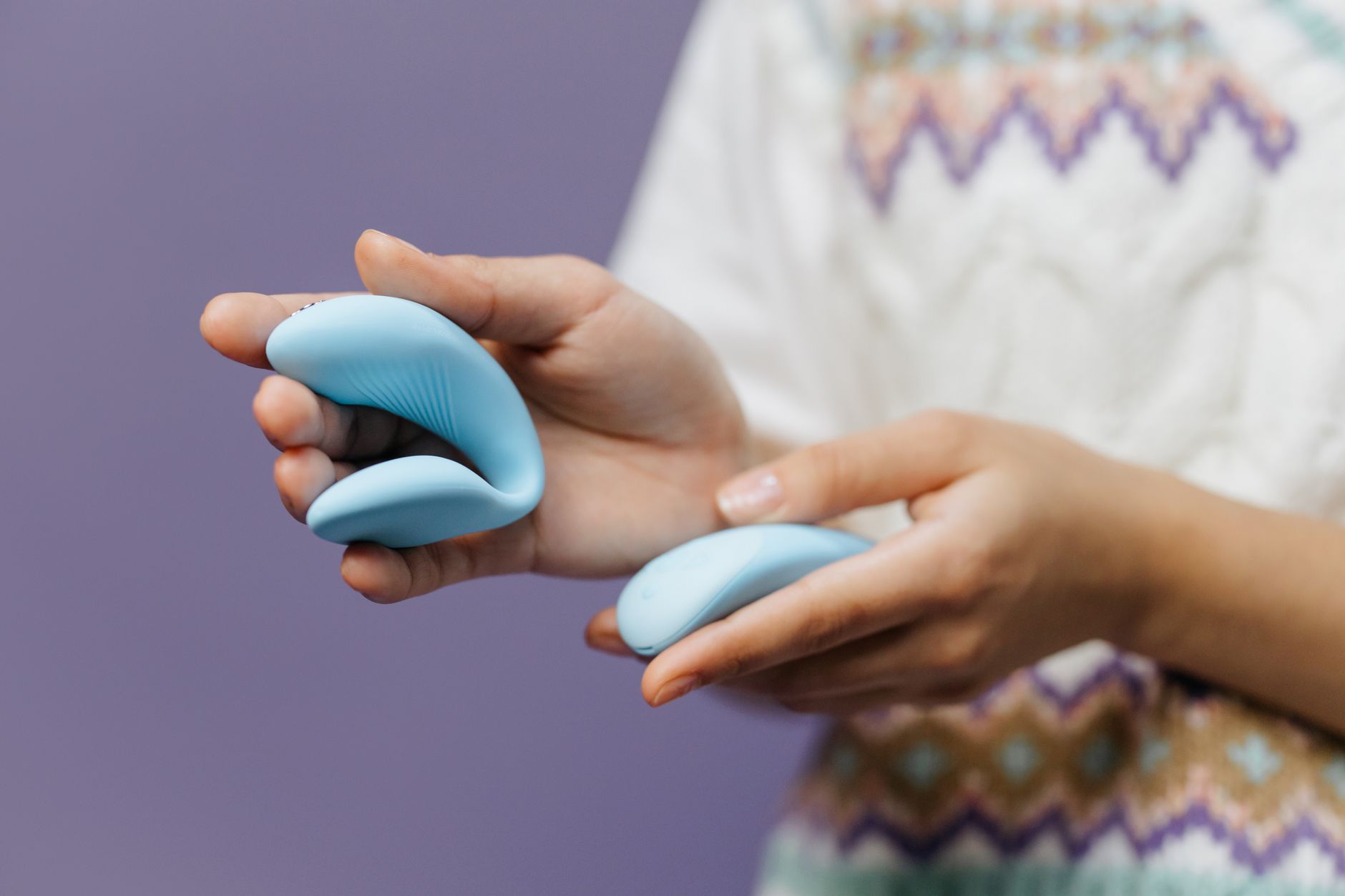
Photo by cottonbro studio on Pexels
Bringing the lemon vibrator into partnered sex
Once you've had a few solo sessions and you feel more familiar with what actually turns you on, the next step is integrating that knowledge into sex with your partner. This is where the conversation matters more than the toy.
Tell your partner what you discovered. "I realized pattern 3 on the lemon actually feels better for me than pattern 2." "I need longer to warm up than I used to." "I want you to try this while we're together." The vulnerability of saying what you want is actually what rebuilds desire. It's the opposite of the routine boredom you've been in. It's novel. It creates anticipation.
Many couples find that using a lemon clitoral vibrator together is more arousing than either partner doing it alone, because suddenly there's novelty again. You're collaborating instead of just repeating the same script. Your partner gets to watch you discover your own pleasure. That's actually an incredibly intimate thing, and it's different from what you've been doing.
Start slow. Maybe your partner holds the lemon vibrator while you guide them. Maybe you use it on yourself while they're inside you or while you're kissing. Maybe they use it on you while you focus on your own sensations instead of worrying about pleasing them back. The specific logistics don't matter as much as breaking the pattern of how sex has been happening.
The emotional work underneath
Here's the part that most articles skip: the desire issue is also an emotional issue, and a toy can't fix that part. The toy just opens the door.
Often when couples experience a libido drop in the early-to-mid stages of a relationship, there's an underlying conversation that hasn't happened. Maybe you're feeling taken for granted. Maybe your partner isn't pulling their weight with household stuff and you resent them. Maybe you're afraid they're going to leave and you're protecting yourself by not getting too invested. Maybe you're bored because you've stopped dating and you're just existing together.
Use the shift to using a lemon vibrator as a chance to also have some real conversations. "I want to rebuild intimacy in a way that feels good for both of us." "I've been feeling disconnected and I want to fix it." "I need you to help me feel desired again." Those conversations are uncomfortable. But they're what actually creates the safety and intentionality that sustainable desire is built on.
The timeline you actually need
You won't use a lemon vibrator for two weeks and suddenly feel the way you did in month two. That's not how this works. What you're doing is laying a foundation for a different kind of desire. It's less automatic but more grounded. It's less about neurochemistry and more about choice.
Give this three to four months of actual intentional work. Solo exploration with your lemon clitoral vibrator. Conversations with your partner about what you're learning. Experimenting with new patterns or timing or ways of touching. Gradually, the arousal will return. It won't feel exactly like it did before. It'll feel different. More sustainable. Less like magic and more like something you're building together.
If after four months of intentional effort the desire still isn't returning, then check in with yourself about whether this is actually a relationship issue or whether something medical is happening (hormonal changes, medication side effects, stress, depression). Those are real things that need addressing too. But most of the time, the desire comes back when you stop expecting it to be automatic and start treating it as something worth your time.
The real benefit of doing this work now
The couples I see who figure out how to rebuild desire early in a relationship are the ones who stay connected long-term. Because they learned the lesson that you can't just coast. You have to tend the garden. A lemon vibrator is a tool for that tending. It's a permission slip to prioritize your own pleasure. And when you prioritize your pleasure, your partner benefits. When your partner feels desired instead of like they're chasing you, they relax. When you both relax, everything gets better.
This is fixable. You haven't broken anything. You're just at a transition point, and transition points are where relationships either get more real or they stall. You're choosing to get more real. That's the whole thing.
People also ask
Can I use a lemon vibrator if I'm not sexually attracted to my partner anymore?
If the desire drop is specifically about your partner and not about relationships in general, then no. A toy won't fix that. Sexual attraction is important in a relationship, and if it's truly gone, that's a bigger conversation with your partner or a therapist. But most of the time, what feels like lost attraction is actually just the death of novelty combined with resentment or disconnection over something else. Address those first. The attraction often comes back.
Is using a vibrator with a partner a sign the relationship is in trouble?
Absolutely not. Couples who explore together often have better sexual satisfaction and relationship satisfaction overall. It's a sign you're both willing to try something different. That's healthy. The only time it's a red flag is if one person is pressuring the other, or if someone's using it as an escape from dealing with real relationship issues.
How do I bring up using a lemon vibrator if my partner might feel insecure?
Start with honesty about why you're suggesting it. "I want to reconnect with pleasure because I've felt distant, and I think this could help both of us" is very different from "We need to spice things up because you're not enough." Frame it as collaboration, not criticism. And listen to their concerns. If they're insecure about penetration or performance or something else, that needs addressing separately.
Will using a vibrator alone make me lose interest in partnered sex even more?
No. Actually the opposite. When you know what turns you on, partnered sex usually gets better because you can actually guide your partner. The problem is when you're not exploring your own pleasure at all, so you have no data about what works for you. A lemon vibrator gives you that data.
How long does it usually take for libido to come back after the honeymoon phase?
It depends on what you do about it. If you wait passively for it to come back, it might take years or never come back. If you intentionally engage with your own pleasure and communicate with your partner, you'll usually start noticing a shift within four to eight weeks. Real sustainable shifts take two to three months of consistent effort.
What if my partner doesn't want to involve a vibrator?
Then you have a conversation about why. Is it insecurity? Is it a value thing? Is it just unfamiliar? A lot of times when partners resist, it's because they think it means they're not enough. Reassuring them helps. "This is for me to learn about my own body, and then I can tell you what I like" is different from "You're not doing it right, so I need a toy."
If you're dealing with low desire in a relationship and you want a space to explore this more deeply, reach out to us at Hello Nancy Lemons. We have resources and guides on rebuilding intimacy, and our team is here to answer questions about how a lemon vibrator might fit into your specific situation. You're not alone in this, and it's absolutely fixable.