Let's talk about the trade-off nobody warns you about
Antidepressants work. They quiet the noise in your head, they stabilize your mood, they give you back your life. And then they flatten sensation like someone turned down the volume on pleasure. You're not broken. You're not being punished. Your nervous system is doing exactly what the medication is designed to do: dampening signals.
Here's the honest part: this side effect is real, common, and almost never discussed in the GP's office. Around 40 to 60 percent of people taking SSRIs report some degree of sexual side effect. Most of those people never bring it up with their doctor. And most doctors never ask. So you're sitting here, feeling numb from the neck down, wondering if pleasure is just off the table now.
It isn't. But the path back requires understanding what's actually happening, and then using the right tools to work around it.
How antidepressants change sensation at a physical level
SSRIs (selective serotonin reuptake inhibitors) work by increasing available serotonin in your brain. That's good for mood regulation. But serotonin also influences genital blood flow, arousal response, and nerve sensitivity. When you flood the system with serotonin, two things happen simultaneously: your anxiety drops and your genitals become less reactive.
It's not that nerves stop working. They're still there. They're still firing. But the signal is quieter. You need more input to register the same sensation. Some people describe it as touching themselves through a thick blanket. Others say it feels like watching pleasure happen to someone else.
The clitoris is the most densely innervated part of the body. If sensation dulls everywhere, it dulls there first and hardest. This is why traditional vibrators, even good ones, might feel like nothing. You're not turned off. Your nervous system is just being patient with the chemical shift.
The intensity problem and why standard vibrators often fail
Most vibrators are designed for someone with baseline sensation. They buzz at a moderate frequency, they build sensation gradually, they assume your body is reading their signals clearly.
When sensation is muted, moderate intensity feels like nothing. You crank it up. It still feels distant. You keep chasing, trying to find the threshold where you can actually feel it. This is the modal failure point where people give up entirely.
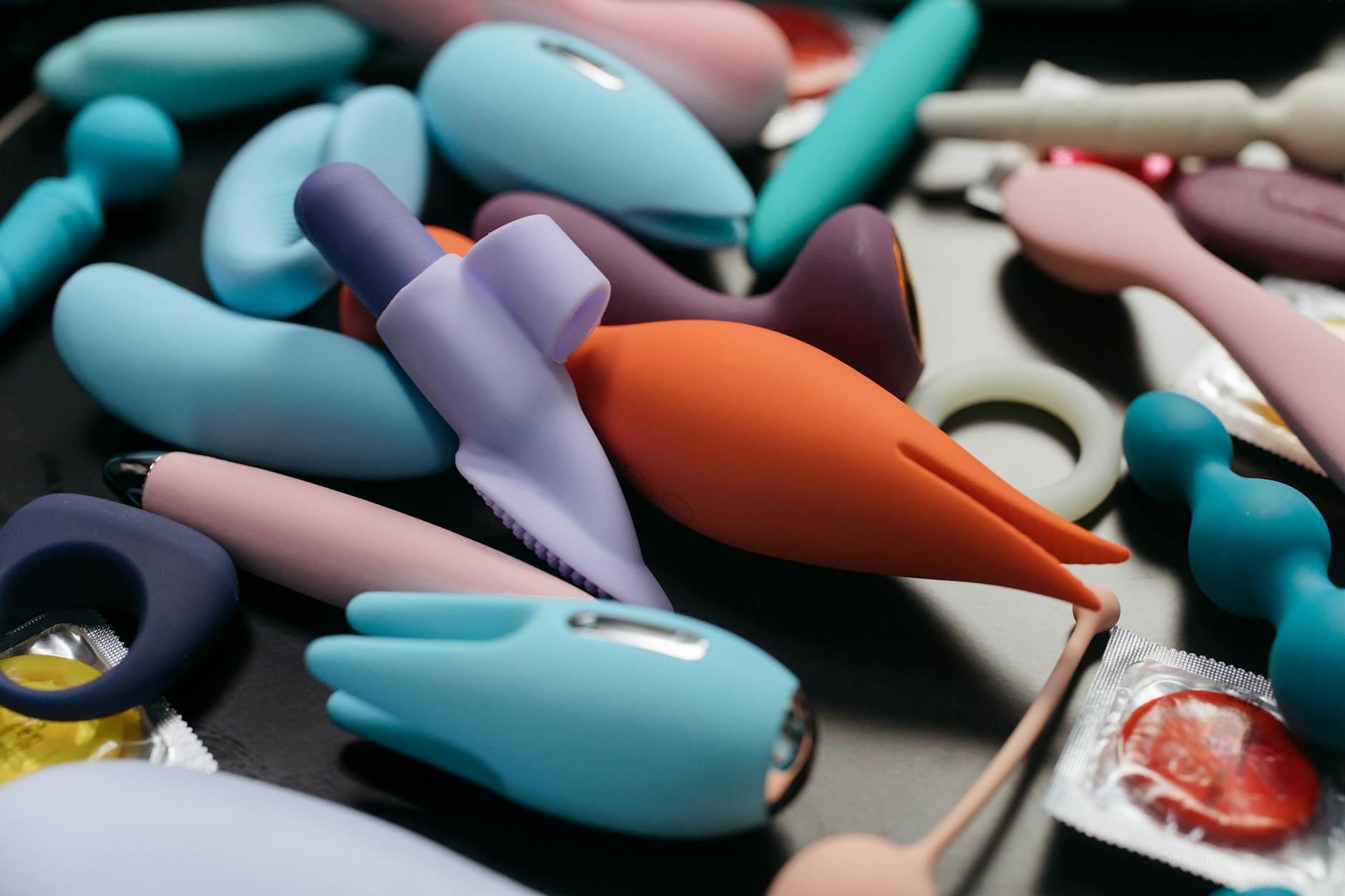
Air-suction technology, like the Lemon clitoral vibrator, bypasses this problem entirely. Instead of relying on vibration frequency alone, suction creates a pressure differential that stimulates a much larger nerve bundle at once. It's not subtle. It's not about buzzing faster or harder. It's about changing the type of stimulus.
For someone on antidepressants, this matters enormously. Suction creates a more obvious, physically distinct sensation that doesn't depend on the same neuro pathways that SSRIs are dampening.
Why medication type matters (and how to talk to your doctor)
Not all antidepressants flatten sensation equally. Bupropion, for example, is actually associated with fewer sexual side effects because it works on dopamine and norepinephrine rather than serotonin. Mirtazapine sometimes increases arousal.
If you're on an SSRI and numbness is severe, this is worth raising with your GP or psychiatrist. You have options:
Dose timing. Some people take their dose at night instead of morning, so the peak concentration hits during sleep rather than during the hours when you're most likely to want sex.
Taking a drug holiday. This is less common now, but some clinicians support a 24 to 48 hour pause once weekly if your condition allows.
Additive medication. Bupropion is sometimes added to an SSRI to counteract sexual side effects.
Switching medication entirely. Not always feasible if your current med is working well for mood, but worth discussing.
None of these are quick fixes. And none of them should happen without talking to your prescriber. But if you've just accepted numbness as the cost of mental health, know that it doesn't have to be permanent or total.
The lemon vibrator approach to sensation that cuts through numbness
Let's be practical. You're not changing your medication today. You need to feel something now.
Start with the understanding that you're not trying to feel pleasure the way you did before medication. That's the frame that kills motivation. You're building a new pathway that works with your current neurology.
With a lemon clitoral vibrator or similar air-suction device, the protocol changes slightly:
Warmup longer than you think you need. Sensation is quiet, so don't rush. Spend 10 to 15 minutes with no goal other than noticing what you can feel. This isn't foreplay. It's recalibration.
Start at a lower suction setting than you'd expect. Suction feels big immediately, so restraint matters. Patterns 1 or 2 on the Lemon let you ease in without overwhelming yourself.
Focus on the sensation of pressure itself, not arousal. Arousal might follow. It might not today. Both are fine. Your job is to notice the physical signal, to prove to your brain that sensation exists, that your body still responds.
Alternate between stimulation and pause. Five minutes on, two minutes off. This creates contrast, which makes sensation more noticeable to a muted nervous system.
If your partner is involved, have them hold the device while you stay still. The act of being stimulated by someone else, even without performance pressure, can unlock arousal that solo stimulation won't.
Working with a partner when numbness is affecting both of you
If you're partnered, this side effect becomes a relational issue fast. Your partner might feel rejected or might feel their stimulation isn't working anymore. Both things are simultaneously true: you love them and you can't feel them right now.
What helps:
Separate the conversation from the experience. Don't talk about sensation during sex. Talk about it on the couch, with tea, when neither of you is trying to be intimate. Say clearly: this is the medication, not you, not us.
Reframe what lemon clitoral vibrators do in partnered sex. They're not replacing your partner. They're a tool that works around the numbness so you can both have pleasure. When you use one together, your partner gets to watch you experience something, which many people find deeply connecting.
Give your partner permission to be frustrated too. They might grieve the ease that existed before. That's legitimate. You don't need to fix their grief while managing your own neurological shift.
Consider sensation play that isn't about genitals. Massage, temperature play, breath, sound. Antidepressants don't numb everything uniformly. You might find that your neck, your inner wrists, your chest are still responsive. Build pleasure there first.
What not to do (the paths that lead nowhere)
Don't assume the numbness is permanent. Neuroplasticity works in both directions. Some people regain baseline sensation months or years into medication. Others find that their nervous system adapts and sensation normalizes at a new level.
Don't chase intensity indefinitely. If you're using the highest suction setting on the Lemon and feeling nothing, the problem isn't that you need a stronger toy. The problem is that sensation is being dampened at a neurological level that no toy can override. That's when the conversation with your doctor becomes essential.
Don't frame pleasure as something you're supposed to feel on demand. Numbness from antidepressants is sometimes inconsistent. Some days it's worse, some days better. Some times of the month it shifts. Building self-compassion around this variability matters more than chasing consistency.
Don't isolate. If this side effect is affecting you, it's affecting a huge population on SSRIs. Online communities, therapy, honest conversations with trusted friends. You're not alone in this.
When to escalate the medical conversation
If numbness is complete (no sensation at all), if it's getting worse over time, or if it's accompanied by loss of interest in things you used to enjoy, tell your prescriber. These might signal that your dose is too high, or that the medication isn't the right fit.
If sensation returns briefly and then disappears again, that's also worth mentioning. Sometimes tolerance builds, and your dose might need adjustment.
A good clinician will listen to this without judgment. Your sexual health is part of your overall health. You deserve treatment that works for your mind without erasing your body.
The path forward
Antidepressants gave you your life back. Using a lemon vibrator or exploring other sensation tools while you're on them isn't a step backward. It's an honest acknowledgment that your nervous system is different right now, and you deserve pleasure anyway.
Start with curiosity instead of pressure. Notice what you can feel. Work with your partner or work solo, but work deliberately. Talk to your doctor about the numbness. Explore whether medication timing or type might help.
Sensation can return. Pleasure can rebuild. And you don't have to choose between mental health and physical pleasure. You get both. It just might look different for a while.