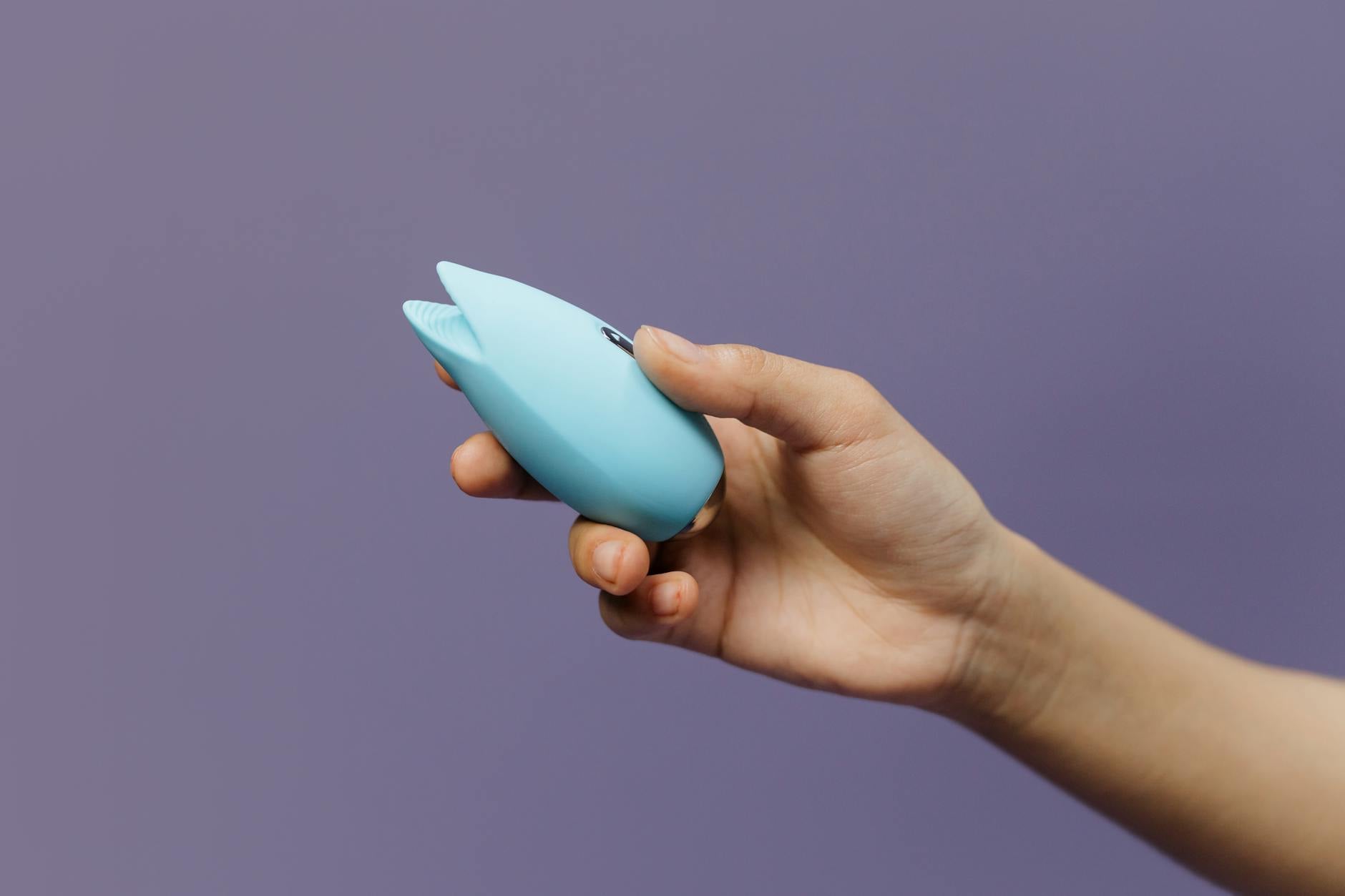
How to Use a Lemon Clitoral Vibrator With Your Partner During Foreplay
Let's be real. Bringing a lemon clitoral vibrator into bed with a partner feels loaded. You're worried it signals something is missing. You're wondering if they'll feel replaced. You're unsure about the actual mechanics — like, who holds it, and when do you introduce it without killing the moment.
Honestly, most of that anxiety dissolves once you've done it once. The logistics are straightforward. The conversation is the hard part, and even that gets easier with a simple frame.
Start with why, not what
The conversation doesn't belong in the bedroom. It belongs over coffee, or on the couch, or whenever you two talk about things that matter.
Here's what doesn't work: "I want to use a vibrator." That lands like a criticism. Here's what does: "I've noticed I enjoy deeper clitoral stimulation, and lemon vibrators actually work really well for that. I'm curious to try one with you. Want to explore that together?"
Notice the difference. The first version centers the vibrator. The second centers your pleasure, your curiosity, and your partner.
Your partner might say yes immediately. They might need time to think about it. They might have questions. All of that is fine. If they're resistant, push back gently but don't override them. Coerced participation ruins everything. Better to revisit the conversation in a month than to force it now.
For partners who feel nervous: normalize it. A lemon clitoral vibrator isn't a replacement. It's an add-on. Most people with vulvas don't have orgasms from penetration alone. A vibrator makes partnered sex work better, not makes their partner obsolete. You're literally making the experience more successful for both of you.
The practical setup
Once you've talked and both agreed, here's how the physical part actually works.
Positions that invite a lemon vibrator naturally: Spooning from behind is the easiest entry point. Your partner can reach the front of your body without contortion. Woman-on-top also works well because you're controlling depth and angle. Side-by-side facing each other works if you're the one holding the vibrator, which gives you full control.
Positions to skip: Positions where your partner can't easily access your clitoris without stopping everything. Save those for nights you're not using toys.
Who holds it. In the beginning, you hold it. You know the angle, the pressure, and the rhythm that work for your body. Your partner is learning. Once they get comfortable, they can take over. Many couples eventually share, taking turns holding or with both hands involved. Let it evolve naturally.
When to introduce it. Not at the very start. You want to build arousal first, with hands and mouths and bodies. Once you're already turned on and your partner is inside you (or before penetration if that's your preference), that's when the lemon vibrator enters. By that point, you're both already committed to the moment.
Using a lemon vibrator mid-sex
Once penetration is happening and you want to add clitoral stimulation, here's the sequence:
Start at the lowest setting. Even if you normally use higher intensities alone, dial it back when someone else is involved. You're building shared rhythm, and starting soft makes it easier for your partner to see what's happening and adjust.
Position the vibrator so it rests against your clitoris without you having to hold it in place with tension. You want your pelvic floor relaxed. Most people find that holding it at a slight angle — not directly perpendicular, but angled slightly toward your partner — feels more integrated with the movement.
If you're using a lemon clitoral vibrator specifically, the suction-style stimulation means you can position it and leave it there. You're not thrusting with it the way you would with a traditional vibrator. Let it work. Some people add slight up-and-down movement; others stay still. Your body will tell you which feels better.
Talk while it's happening. "Slower." "Right there." "A little more pressure." Your partner isn't a mind reader. Clear feedback makes the experience better for both of you and also makes your partner feel confident and useful, which most of them actually want to feel.
Communication during
This is where a lot of couples freeze up. They think sexy time should be silent or that speaking kills the mood.
It doesn't. Speaking actually increases arousal because it keeps both partners engaged and responsive. You're not writing a novel. You're giving one-word or two-word directions. "Yes." "Faster." "Keep that." "There."
If your partner isn't sure how hard to hold it or what angle works, ask them: "How does this feel on your side?" Sometimes a vibrator can press into your partner's body uncomfortably. Quick adjustments make it work for everyone.
And here's the thing that shifts everything: thank them. "I love that you're doing this with me." "That feels incredible." Acknowledgment makes it feel collaborative, not like one person is being done to while the other watches.
Timing the orgasm
If you normally come from clitoral stimulation, a lemon vibrator usually speeds that up. That can feel amazing or panic-inducing depending on how you feel about pace.
If you come quickly and your partner isn't ready, you have options. You can ask them to keep going inside you while the vibration continues. You can pause the vibrator and let them finish without it. You can do rounds — you orgasm first, then focus on your partner's pleasure after.
There's no rulebook. You're figuring out what works, and it might be different every time. That's exactly how it should be.
After
Clean the lemon vibrator with warm water and a tiny bit of unscented soap. Store it somewhere accessible. And then maybe actually talk about what you both felt.
Did your partner like it? Do they want to use one of their own design next time? Did the timing feel right? Would a different position help? These aren't awkward questions. They're the conversations that turn good sex into great sex.
Most couples who introduce a lemon clitoral vibrator find that the first time is slightly awkward and the second time is dramatically better because now nobody's performing nervously. By the third or fourth time, it feels like a normal part of your toolkit.
If it's not working after a few tries, that's information too. Maybe the timing isn't right. Maybe your partner genuinely isn't comfortable. Maybe you need a different toy. Maybe you need more one-on-one conversations about what's actually making people hesitant. None of that means you've failed. It means you're paying attention.
The deeper piece
Using a lemon clitoral vibrator with your partner is logistics, yes. But it's also a statement: your pleasure matters enough to prioritize. Your partner is willing to learn and adapt. You both trust each other enough to try something that feels a little uncertain.
That last part is the actual intimacy. The toy is just the vehicle.
If you're currently partnered and thinking about trying a lemon vibrator together, the conversation is the only real barrier. Everything else flows from that. And if you're single and wanting to understand how they work before introducing one to a future partner, a little solo exploration first gives you confidence and clarity. Either way, you're not doing anything wrong. You're just making intentional choices about your pleasure.
For more on making toys feel natural in partnered sex, check out our guide on best lemon clitoral vibrators for couples using together. And if you're brand new to lemon vibrators entirely, how to use a lemon vibrator for the first time walks through the solo mechanics first.
People also ask
Will my partner feel insecure if I bring a lemon clitoral vibrator into our sex?
Some partners do initially, but it's usually because they misunderstand the purpose. A lemon vibrator isn't a replacement for them. It's a tool that helps you experience pleasure during partnered sex. Most people actually feel more confident once they understand that they're not being replaced — they're being given better access to what turns you on. The vulnerability of asking for what you need is also deeply intimate for many couples. If your partner remains uncomfortable after you've explained clearly, that's worth exploring in a deeper conversation about sex and insecurity. Sometimes that's about the vibrator. Sometimes it's about something else.
What's the difference between using a lemon vibrator alone versus with a partner?
Alone, you control everything: pressure, angle, duration, intensity. With a partner, you're coordinating. If your partner is inside you, the angle and depth of penetration affect how the vibrator feels. Some people find they need lighter pressure when partnered because the combined stimulation is already intense. Others want more. The mental experience is also different. There's the vulnerability of being watched or touched while using a toy, which some people find extremely hot and others find jarring. Start with positions where you have privacy and can go at your own pace.
How do I know if my partner is actually into it or just doing it for me?
Ask. "Are you enjoying this?" "Want to keep going or try something else?" You can also watch for physical cues. Are they engaged? Are they moving with you or just holding still? Are they asking questions or offering ideas? But really, the direct question is the only one that matters. If they say they're into it but their body language says otherwise, then you have a conversation about what's actually going on. Sometimes people say yes when they mean "maybe" or "I'm not sure yet." That's fine information to have.
Can you use a lemon clitoral vibrator during all types of penetration?
Mostly yes, but some positions make it harder. Woman-on-top, you can access it easily. Missionary, your partner can hold it or you can. Spooning, very accessible. Positions where you're face-down or contorted make it tricky. Also, if your partner is already using their hand or mouth on your clitoris, adding a vibrator might be redundant or even too much stimulation. The best positions are ones where there's physical space for the vibrator and where both of you have at least one hand free.
Is a lemon vibrator better for couples than other types of vibrators?
Lemon clitoral vibrators, including the Lem, use suction-style stimulation rather than traditional vibration. That means they don't require constant repositioning the way some vibrators do. You can position it and let it work without you or your partner having to hold it in a specific angle. For partnered sex specifically, that hands-free aspect is genuinely useful. But the "best" toy is the one that works for your body. Some people prefer rumbly, broad stimulation. Others want precision. If you haven't tried one yet, it's worth exploring, but your preference is the only real measure.
What if we try it and it doesn't feel good?
Then you've learned something useful. Maybe the timing wasn't right. Maybe you needed more warm-up first. Maybe that particular toy isn't the one. Maybe your partner wasn't actually into it. Any of those is fine information. You talk about what didn't work, you adjust, and you try again or you move on. The goal isn't to force a particular outcome. The goal is to explore together and figure out what actually feels good for both of you. Some couples never use toys and have fantastic sex. Some use them regularly. Neither is better. It's just different.