You're not losing your mind. Your libido just came back online.
Here's the thing about desire: it's never as simple as "on" or "off." For months, maybe years, you've felt nothing. And then one day, out of nowhere, it's back. A random thought. A moment of physical awareness. A partner's touch that lands differently than it has in forever. Suddenly your body remembers what wanting feels like, and it's shocking.
Most people assume this is only supposed to happen once in their twenties. That libido returns smoothly and stays. The reality is messier. Stress, hormones, relationship cycles, burnout, grief, medication, life seasons. Any of it can dial your desire down to zero. And any of it can bring it roaring back.
The tricky part isn't celebrating the return. It's reintroducing pleasure without shame or performance pressure. Your body has been in low-desire mode. It's muscles and nerve pathways and brain connections have been quiet. Jumping straight back into intensity, solo or with a partner, often backfires.
Why the timing feels so confusing
Libido doesn't announce itself. It doesn't follow a schedule or a logical trigger. You've probably asked yourself a hundred times: why now? Why after all this time? The answer is usually "all of the above."
Stress lifts. A relationship shifts. You finally get sleep. A medication changes. Your cycle settles. Midlife brings a weird permission slip that sometimes just hits different. Your partner does something that lands. You read something, see something, think something that wakes something up.
And here's the part nobody talks about: sometimes desire returns when it inconveniently doesn't make sense. You're single and it feels complicated. You're in a partnership where desire used to be synced but isn't anymore. You're in a season where logistically it's messy. Your brain's like "why now though" and your body's like "I don't make the rules."
This matters because shame about the timing kills it faster than anything else. The desire isn't wrong. The timing isn't selfish. Your body waking up is actually data. It's telling you something shifted. Honor that.
The reconnection protocol (solo first)
If you haven't masturbated in months, jumping into partnered sex or intense sensation often backfires. It's like going from zero cardio to a 10-mile run. Your body tenses. Your mind overthinks. The pressure to perform kills the fragile thing you're trying to rebuild.
Start solo. This isn't about orgasm. This is about relearning your own body's language.
Week one: touch without expectation. No vibrator. No pressure. Just hands, soap in the shower, fabric textures, a partner's touch if you have one but with explicit "this isn't going anywhere" permission. The goal is sensation, not arousal. Your nervous system needs to remember that touch is safe and pleasurable before you ask it to build toward anything.
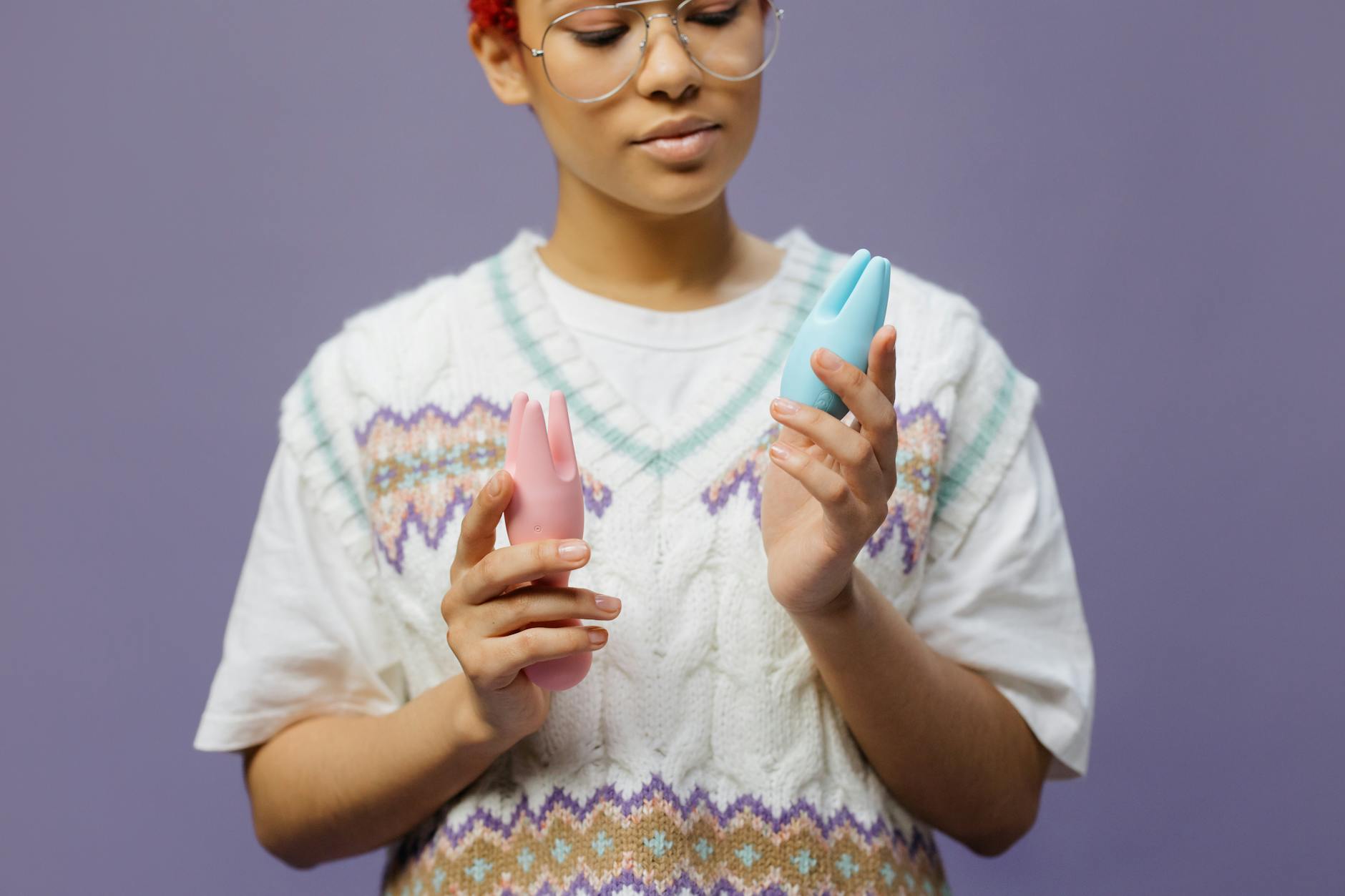
Week two: introduce slow, easy sensation. Low speeds on a lemon vibrator like the Lem. Pattern 1 or 2. Not on the clitoris yet, just around the area. Inner thighs. The mons pubis. The space between. You're reintroducing vibration slowly.
Week three: direct, short sessions. Now bring the vibrator directly to the clitoris. Keep it at low speed. Set a timer for 5 to 10 minutes. The goal is still sensation, not orgasm. If orgasm happens, great. If it doesn't, that's also great. You're teaching your body that pleasure doesn't have to lead anywhere.
This timeline might feel slow. Honestly, it might take longer. Six weeks instead of three. That's not a failure. That's your nervous system healing.
What's happening in your body (the science part, plain English)
When libido's been absent for a while, the physical architecture changes slightly. Blood flow to the genitals decreases. The pelvic floor muscles tense chronically as a protective response. Nerve sensitivity downregulates. Your brain's pleasure response circuits get quieter.
When desire returns, all of that has to reboot. The tissues need time to remember increased blood flow. The pelvic floor needs to learn to relax again (not just contract). The nerve endings need to sensitivity recalibrate. Your brain needs to remember that pleasure is safe.
This is why slow matters. A lemon clitoral vibrator's suction-based stimulation is actually gentler for this process than traditional vibration because it doesn't rely on repetitive, forceful contact. The sensation builds differently. It's a chain reaction of stimulation rather than a jackhammer of intensity.
Partnered sex after the dry spell
If you have a partner, this is where communication gets weirdly important. Your libido came back. Theirs might not have, or it might be at a different speed, or they might be wary after the long absence.
Talk about this when you're not trying to have sex. Literally say: "My desire's back. I'm relearning my body. Here's my timeline. Here's what I need from you." Give them permission to ask questions. Give yourself permission to say "I don't know yet."
When you do have partnered sex, the same rules apply. Go slower than you think you should. Build for longer. If your partner wants penetration and you're still in the "clitoral stimulation only" phase, use the Lem during sex. You're not being difficult. You're being clear about what your body needs.
Many couples find that a partner using a lemon vibrator on you during sex is the gateway back to connection after a long dry spell. It removes pressure from the partner to "do the right thing." It lets you focus on sensation. It often makes partnered sex feel less like performance and more like collaboration.
The emotional part (which is honestly bigger than the physical part)
When libido disappears, so does a piece of your identity. "I'm not a sexual person." "This part of me is gone." "I'm broken." The stories you tell yourself during the absence get sticky.
When desire comes back, you have to grieve that old story and build a new one. That's not easy, especially if the absence lasted years.
You might feel guilty. Guilty for the time you couldn't engage. Guilty if your partner waited, or didn't. Guilty that the return feels selfish. Guilty that you're suddenly horny when everything else in your life is chaotic. All of that's normal. None of it means you're doing something wrong.
You might also feel scared. Scared it'll disappear again. Scared that you've changed too much. Scared that it won't feel the same. Some of that fear is protective. Some of it's just your nervous system being cautious. Both are valid.
The biggest shift I see in my clients is when they stop treating desire's return as a test. "If I'm not interested in sex right now, does that mean it's going away again?" No. Desire fluctuates. You can be interested one day and neutral the next. You can want solo pleasure and not want partnered sex. You can love your partner and need your own space. All of that's health, not regression.
When to ease up (and when to push gently forward)
If using a lemon vibrator brings back tension headaches, numbness in your hands, or a really intense urge to stop, pause. You're pushing past a nervous system boundary. The goal is relearning, not forcing.
If you notice numbness or decreased sensation, take a break for a few days. Chronic vibration stimulation without recovery can temporarily desensitize the nerves. This is especially true in the first few weeks of reconnecting.
If your partner's impatient and pressuring you to move faster than feels safe, that's a separate conversation and honestly, a bigger issue than libido. You deserve a partner who can hold space for your body's relearning. Full stop.
The unexpected gifts that come with reconnection
Here's what I've noticed: the people who reconnect with desire after a long absence often describe their sexual self differently than they did before. Not "better" exactly, but different. More intentional. Less performance-driven. More aware of their body's actual signals instead of what they think they're supposed to feel.
The journey back often teaches you things the first time around didn't. You know what stops you. You know what your body actually needs, not what you thought it should need. You've had the experience of desire disappearing and returning, which is weird permission to let it ebb and flow without panic.
Use a lemon vibrator not because it's the "right" toy, but because it's designed to work with your body's actual neurology. The stimulation pattern tends to feel more resonant than traditional vibrators for people relearning sensation.
And remember: reconnecting isn't about getting back to how it was. It's about meeting your current self where she is, and letting pleasure evolve from there.
Frequently asked questions
How long after libido returns should I wait before using a vibrator?
There's no magic number, but I usually recommend at least a week of non-vibrator touch first. This helps your nervous system register that sensation is safe again. After that first week, starting with a lemon vibrator on very low intensity is totally reasonable. You're not doing anything wrong by reaching for one sooner if that feels right to you.
Can using a vibrator too soon kill the momentum of returning desire?
Not really, but using it intensely too soon can create temporary numbness or performance pressure. If you ease in slowly and keep early sessions short, you're actually creating positive reinforcement. Your brain learns that pleasure is available and safe. That's when desire tends to stick around.
My partner's libido never went down and they're frustrated with my slow timeline. What do I do?
This is incredibly common and it's not actually about sex. It's about someone else's need to feel desired clashing with your need to rebuild safely. That's a conversation for when you're not in bed. You might suggest that your partner work with a solo vibrator or erotica while you're rebuilding your own capacity. You might suggest couples therapy to help navigate the mismatch. You might also recognize that constant pressure is actually the thing that kills libido fastest. Set that boundary.
What if my libido returns but only in specific contexts (solo, not partnered, or with a particular type of touch)?
That's actually your body being very clear about what it needs right now. Listen to it. Maybe partnered sex will feel good later. Maybe it won't be your thing in this season. Maybe you need a certain type of foreplay or a particular dynamic. This isn't a problem. This is data. Honor it.
Should I tell a partner I'm using a vibrator if I'm also trying to reconnect sexually with them?
Absolutely, but frame it clearly. "I'm relearning my body and I'm using this tool to rebuild sensation safely. It actually helps me be more present with you when we're together because I'm not anxious about whether I can still feel things." Most partners respond well to honesty and clarity. The secrecy is usually what causes friction, not the vibrator itself.
Is it normal to have orgasms that feel different after libido comes back?
Completely normal. Your body's been quiet. When sensation returns, it often feels unfamiliar at first. The orgasms might feel shorter, longer, more intense, less intense, or just different in texture. This usually evens out after a few weeks of regular reconnection. Your body's recalibrating.
The one thing that actually matters
Your libido went away. It came back. Neither of those things are your fault. Neither makes you broken or "doing it wrong." Your body's just responding to what it needed at the time, and now it's ready for something different.
A lemon vibrator is a tool. Hello Nancy Lemons designs theirs specifically for this kind of gentle, responsive stimulation. But the real work is the permission you give yourself to reconnect slowly, without shame, on your own timeline. That's where everything shifts.
If you're navigating this alone and want to talk through partnered dynamics or you're stuck in a communication loop with your partner, my contact info is below. Sometimes reconnecting with desire is as much about the emotional landscape as it is about sensation.
Your pleasure matters. Your timeline matters. Your body's return to wanting matters. Treat all three like they do.