Here's the hard truth about desire mismatch
One of you wants sex twice a week. The other wants it twice a month. Or it's flipped. Or the gap is bigger. And right now, the disparity is creating tension that doesn't quite have a name yet. Not resentment. Not coldness. Something in between. A quiet friction that compounds.
Desire mismatch is one of the most common relationship problems I see, and it's also one of the least talked about. Couples will say "we're not having enough sex" when what they really mean is "we want it at different frequencies, and one of us feels rejected while the other feels pressured." Those are completely different problems that need completely different solutions.
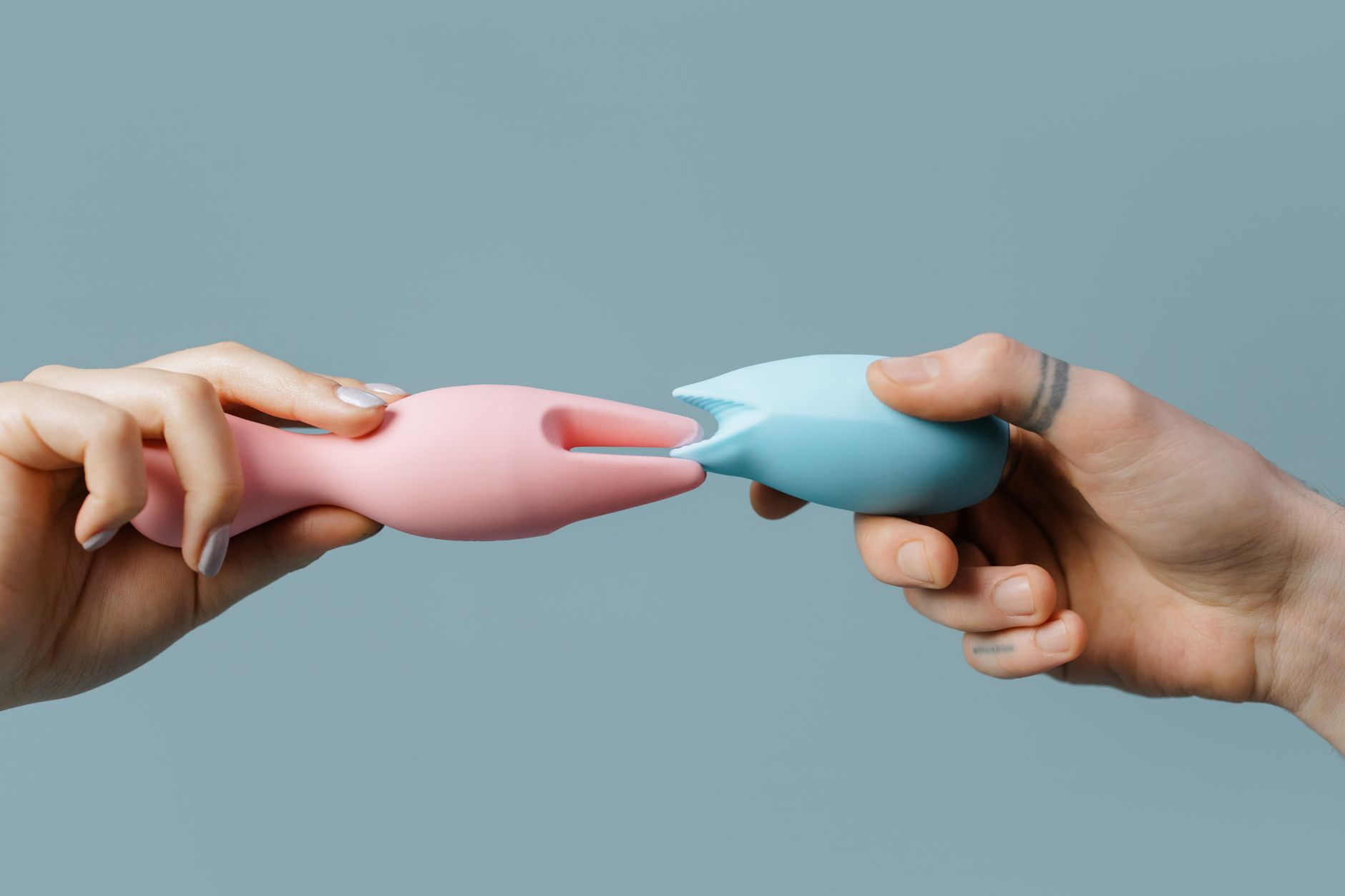
Here's what I know: adding a lemon clitoral vibrator to the picture won't solve the mismatch itself. But it can solve the secondary damage the mismatch creates.
Why mismatched desire damages relationships differently than low desire
When both partners want sex less often, there's a kind of ease to it. You're aligned. You schedule it or you don't, but there's no subtext.
Mismatch creates a power dynamic that degrades everything around it. The higher-desire partner starts feeling rejected. The lower-desire partner starts feeling guilty, then resentful about the guilt, then withdrawn. Sex stops feeling like connection and starts feeling like a debt that one person owes the other. That's death.
What makes it worse: most couples don't separate the desire conversation from the love conversation. They blur together. "You don't want me" becomes "You don't love me." And the lower-desire partner responds by pulling away even more, because they're trying to defend their right to say no without being emotionally punished for it.
Both of those needs are real and valid at the same time. You can't resolve the mismatch by being more loving. You have to structure the sex life differently so that each person's needs get met independently.
How a lemon vibrator changes the structure
When you introduce solo pleasure back into the picture, you're creating two separate tracks.
Track one: partnered sex at whatever frequency works for both of you. This gets protective time and space. No performance pressure. Just connection.
Track two: independent pleasure. The higher-desire partner uses a lemon clitoral vibrator between partnered sessions. Not as a substitute for their partner. As a release valve. Something that's entirely for them.
This sounds simple, but it's actually revolutionary in a couple with desire mismatch because it removes the guilt loop. The higher-desire partner stops needing their lower-desire partner to meet a need that their partner can't meet. And the lower-desire partner stops feeling like they're failing at sex.
You're both getting what you actually need. The mismatch doesn't disappear, but it stops corroding the relationship.
The conversation you need to have first
Before you use a lemon vibrator solo because of desire mismatch, you have to talk about it.
Not during sex. Not when you're frustrated. Have this conversation the same way you'd talk about money or kids. Clear, honest, and with enough time to process what you hear.
Here's the frame that works: "I notice our desire feels different right now. I'm not upset about that. But I'm noticing it's creating tension between us, and I don't want it to. I want to find a way for both of us to feel good. Can we talk about that?"
Then actually listen to what your partner says. Don't problem-solve yet. If they say they feel pressured, that's real data, not an attack. If you say you feel rejected, your partner needs to hear that without defending. Get specific about the impact. "When we haven't had sex in a few weeks, I start wondering if you're attracted to me" is useful. "You're withholding" is not.
Once you both understand what's actually happening, you can talk about solutions. Using a lemon vibrator is one solution. But you have to agree to it together, and you have to understand what problem it's actually solving. It's not solving the fact that you want different frequencies. It's solving the secondary problem: the rejection and guilt that the frequency mismatch creates.
How to actually use a lemon vibrator for this
If you're the higher-desire partner, here are the practical moves.
First, build solo pleasure into your routine at a completely separate time from partnered sex. Not right before bed when your partner is reading. Not when they're likely to notice or feel hurt. A separate, scheduled time that's just for you. Saturday morning. Tuesday evening. Whenever.
Second, actually plan it. Don't make it furtive. It's not shameful. It's you meeting your own needs. If you're in a shared home, you might actually need to close the door or wait for privacy. That's not hiding. That's respect for boundaries.
Third, use a lemon clitoral vibrator because suction-based stimulation reaches sensations that your hand or a traditional vibrator might not. You deserve an orgasm that actually satisfies you, not one that feels like you're checking a box. The Lem or a similar lemon vibrator gives you that depth of sensation.
Fourth, don't talk about it constantly. This isn't an exhibitionist thing unless both partners want it to be. Solo pleasure is solo. It's yours. The fact that it exists is part of the solution, but you don't need to narrate it.
If you're the lower-desire partner in this dynamic, your job is simpler but equally important: actually agree to it. Don't just tolerate it while feeling weird. Get curious about why it bothers you if it does. Is it jealousy? Guilt? Fear that you're not enough? Talk about that with your partner or a therapist. But don't use it as a reason to make your partner feel bad for their own pleasure.
What actually changes when you do this
Three things typically shift.
First, the pressure disappears. The higher-desire partner stops feeling like every encounter needs to count for their whole week's worth of sexuality. Sex becomes less transactional and more connected. Paradoxically, that often makes people want it more frequently anyway, because it feels less like a negotiation.
Second, the lower-desire partner stops feeling hunted. When the pressure lifts, they're often able to access desire more easily. Not always. But often. Because desire can't flourish under guilt.
Third, you both get to be fully yourself. You're not performing a version of your sexuality that doesn't quite fit. The higher-desire partner isn't pretending to be okay with a frequency that doesn't satisfy them. The lower-desire partner isn't pretending to want something they don't. You're both in reality. And reality is where actual intimacy lives.
When desire mismatch is actually a symptom of something else
Sometimes mismatched desire isn't actually about desire. It's about:
Stress or burnout (usually in the person with lower desire). If someone's depleted at work or managing a lot at home, sexuality goes quiet. A lemon vibrator won't fix that. Rest and support will.
Relationship distance (both people). If you're not connected emotionally, sexual desire naturally drops for most people. Sexuality isn't separate from emotional intimacy. It's an expression of it. If the emotional connection has frayed, you're not going to fix it with a vibrator. You need to actually address what put distance between you.
Unresolved hurt or resentment (usually in the person with lower desire). If your partner hurt you months ago and you haven't actually processed it, your body knows. Sexuality goes offline. Again, this isn't a vibrator problem. It's a conversation problem.
Different love languages or attachment styles. Sometimes one person expresses love through sex and the other needs security or presence first. The mismatched desire is actually a symptom of not speaking each other's languages.
Before you assume desire mismatch is just about desire frequency, have a deeper conversation. Is there something else under this? If there is, address that first. The lemon vibrator still has a role, but it's not the main solution.
How to know if this approach is actually working
You'll know because tension goes down and connection stays steady or goes up. Not because you're having more sex. But because sex stops feeling like a source of tension and starts feeling like what it should be. Optional, desirable, connecting.
You'll also know because you stop keeping score. The higher-desire partner stops silently counting how many weeks it's been. The lower-desire partner stops feeling guilty about their own body's rhythm.
Sometimes, weirdly, frequency actually increases when you do this. Because neither person is resentful anymore. But that's not the point. The point is that you're both okay with what's actually happening.
FAQ: Mismatched Desire and Solo Pleasure
Is using a lemon vibrator solo considered cheating in a relationship with mismatched desire?
No, not unless you've explicitly defined it that way together. Solo pleasure and partnered sex are different things serving different purposes. If your partner believes solo pleasure is cheating, that's actually a separate conversation about boundaries that you both need to have honestly. Some couples are comfortable with solo pleasure. Some aren't. Either is valid. But you have to agree.
Will using a lemon vibrator make my partner feel inadequate?
It might, initially, if you don't frame it correctly. The conversation matters. This isn't about your partner being inadequate. It's about you having needs they can't meet at your preferred frequency and that's okay. Both things can be true: your partner is great and you also have independent desires that exist separately from partnered sex. If your partner is insecure about it even after the conversation, that's worth exploring together or with a therapist.
Should I tell my partner I'm using a lemon vibrator for this, or keep it private?
That depends on your relationship agreements. If you've both agreed that solo pleasure is okay, it's fine to keep it private. You don't need to narrate your solo sessions. But you shouldn't have to hide it either. If your partner would be upset knowing about it, that's worth examining. Why would they be upset? Is it jealousy, insecurity, or a value difference? Those are real conversations to have.
Can a lemon vibrator fix desire mismatch completely?
No. A vibrator is a tool. It can ease the secondary damage that desire mismatch creates, but it won't make you want the same frequency. The mismatch itself only resolves through honest conversation, lower-desire partners getting support for whatever's driving low desire, and both people accepting that your bodies might just have different rhythms. The vibrator helps both of you get your needs met independently so the mismatch stops damaging the relationship.
My partner wants more sex than I do and feels resentful. Will getting them a lemon vibrator seem like I'm rejecting them?
It might if you frame it as "here, use this instead of having sex with me." That's rejection. But if you frame it as "I love you and want you to feel good, and I also have a different desire rhythm than you, and I think this could help us both feel better about our situation," that's something else. It's an act of care. It's saying their pleasure matters even when it doesn't involve you. That's actually intimate.
What if my partner doesn't want to have this conversation at all?
That's important information. If your partner won't talk about mismatched desire, you have a communication problem that goes deeper than sex. This is worth bringing to a couples therapist. Because avoidance usually means someone's scared or defensive, and that's worth understanding.
If you're navigating mismatched desire in your relationship and want support thinking through the deeper patterns, reach out to us. We're here to help couples find their way back to connection.
References & Sources
Gottman, J. M., & Silver, N. (2015). The Seven Principles for Making Marriage Work. Harmonic Books.
Eastwick, P. W., et al. (2006). Sex differences in mate preferences revisited. Journal of Personality and Social Psychology, 93(2), 245-264.
Meston, C. M., & Frohlich, P. F. (2000). The neurobiology of sexual function. Archives of General Psychiatry, 57(11), 1012-1030.