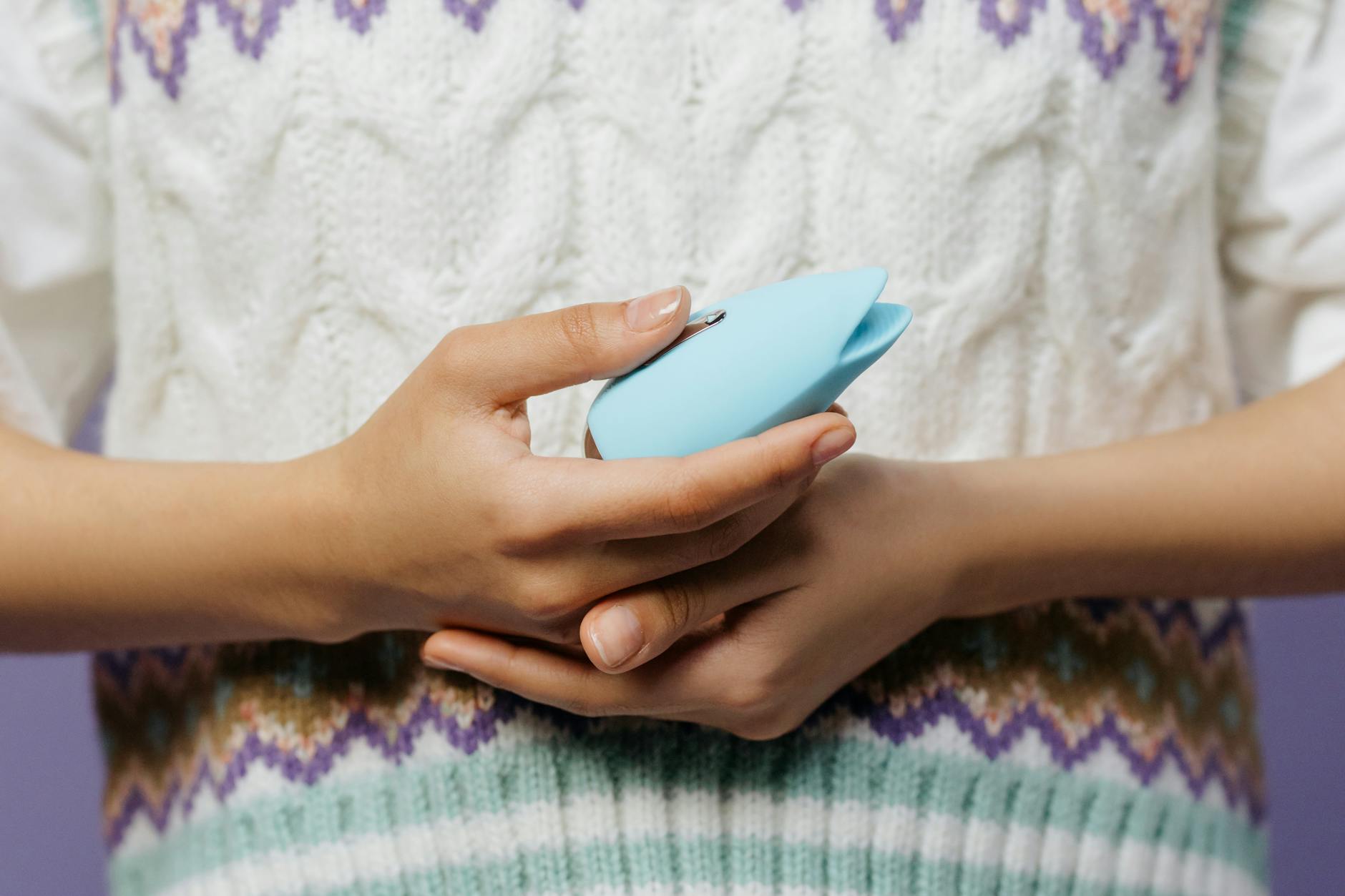
Let's start with what this actually means
Disconnection from your body after trauma isn't a choice you made. It's a protective response. Your nervous system learned to leave, dissociate, or numb down because staying present felt unsafe. That mechanism kept you alive. Now you're trying to come back home to a body that still doesn't feel like yours.
Using a lemon clitoral vibrator in this space is different than using one for pleasure alone. It's about rebuilding the conversation between your mind and your body, one small sensation at a time.
Why touch feels complicated after trauma
Trauma literally changes how your nervous system processes sensation. Your body may have learned to interpret touch as a threat, even when logically you know you're safe. The sensory pathways that used to connect touch to pleasure got rerouted to the alarm system instead.
Adding complexity: many survivors also experience numbness. Not emotional numbness alone, but physical numbness. The genitals can feel like they belong to someone else. Stimulation might trigger flashbacks or dissociation rather than arousal. Some survivors describe it as being trapped behind glass, watching their own body from a distance.
Here's what matters: this isn't permanent. Neuroplasticity means your brain can rewire these pathways. It takes time, consistency, and a tool designed around safety. That's where a lemon vibrator, specifically, helps.
Why a lemon vibrator works differently for trauma recovery
Most vibrators use aggressive vibration patterns. For someone rebuilding trust in their body, aggressive sensation can actually trigger the nervous system into protection mode again. You don't want more intensity. You want control, predictability, and the ability to stop immediately.
Lemon clitoral vibrators use suction and pulse rather than direct vibration. That matters because suction creates a different kind of sensation. It's less mechanical, less invasive, and easier to tolerate. The Lem, for instance, lets you start at the lowest setting and control every aspect of intensity. You're in charge. That control is essential for retraining your nervous system.
Also, air-suction technology lets you create distance between the toy and your most sensitive tissue. You can place the toy on fabric, use a layer of lubricant, or position it slightly off-center if direct contact feels too much. Options = safety.
Building a foundation: start with non-sexual touch
Before you even consider using a lemon vibrator for arousal, your nervous system needs to learn that touch can be safe without leading anywhere. This sounds slow. It is.
Spend 1-2 weeks touching other parts of your body with intention. Not genitally. Use lotion, warm water in the shower, or your hands on your arms, legs, and torso. The goal isn't pleasure yet. It's noticing. What temperature feels safe? What pressure? What rhythm makes your nervous system relax instead of contract?
Journal about it. Sounds awkward, but naming the sensation helps your brain catalog it as non-threatening. "Warm shower on my shoulders felt grounding today." "Lotion on my forearms made me feel present."
Once you notice patterns—maybe you relax with slow, circular motions, or firm rather than light touch—you've got information. You're building a map of what your body actually likes, separate from what you think you should like.
The first time you introduce a lemon vibrator
Don't start between your legs. Start somewhere neutral.
Charge your Lem or whichever lemon clitoral vibrator you're using. Sit or lie down somewhere you feel completely safe and won't be interrupted. Have a water bottle nearby. Wear clothes.
Turn it on at the lowest setting. Touch the suction cup to your inner arm or the inside of your wrist. Notice the sensation without judgment. Warm? Rhythmic? Gentle? Keep it there for 15-30 seconds.
The goal of this session is zero arousal. You're training your nervous system to recognize this as a safe tool, not a threat. That's it. You can stop right there. You've succeeded.
Repeat this 2-3 times over the course of a week, same time each day if possible. Routine builds safety. Your body learns, "This is what happens at 9 p.m. with the lemon vibrator. It's predictable. I'm in control."
Gradual expansion: moving toward the pelvic area
Once your arm doesn't trigger any fear response, try the same sensation on the inner thigh. Still clothed. Still the lowest setting. 15-30 seconds.
You're looking for any sign of dissociation or flashback. Grounding techniques help if they appear. The 5-4-3-2-1 sensory method works well: name 5 things you see, 4 you can touch, 3 you hear, 2 you smell, 1 you taste. It brings you back to the present moment.
If you dissociate, stop immediately. This isn't failure. It's information. Your nervous system isn't ready for this yet. Pause for 3-5 days. Go back to non-sexual touch. The timeline is yours alone.
When you're ready—and you'll know—move to the outer labia with clothes still on, lowest setting, same 15-30 second window. Stay here for 1-2 weeks before anything else changes.
The shift toward sensation without expectation
Eventually, you'll want to remove clothing and make direct contact. But here's the mindset shift that matters: you're not trying to get aroused. You're not trying to have an orgasm. You're rebuilding the relationship between your mind and your body.
Start with lubrication. Water-based is essential because your body may not be producing natural lubrication yet. That's not dysfunction. It's a normal part of trauma recovery.
Place the lemon vibrator on the lowest setting against your outer labia or clitoris, depending on what feels least triggering. You can angle it, move it, or hold it still. Experiment. What feels most like touch rather than stimulation?
If pleasure starts building, that's okay. If it doesn't, that's also okay. You're training your nervous system that sensation doesn't have to lead to anything. Pleasure doesn't have to be the goal. Presence is the win.
What to do if triggers or flashbacks arise
This is real. Dissociation, flashbacks, or panic can show up even if you're doing everything right. Your body is healing, but healing isn't linear.
Stop immediately. Turn off the toy. Ground yourself using that 5-4-3-2-1 method or another grounding practice. Let your nervous system settle for 10-15 minutes. No pressure to keep going.
If triggers are frequent, pause the practice for a week or two. Then try again with even smaller steps. Maybe you go back to clothed touch for longer. Maybe you work with a trauma-informed therapist to process what's coming up. Both are valid.
A lemon vibrator is a tool for reconnection, not a cure. Some days your body will cooperate. Some days it won't. That's not weakness. That's healing.
Building a practice that feels sustainable
The goal here isn't to use a lemon vibrator for intense orgasms, at least not yet. The goal is consistency and self-compassion.
Set a realistic schedule. Maybe 2-3 times per week, same time each day. Your nervous system loves routine. It signals safety.
Keep a simple log. Not detailed or clinical. Just: date, duration, what you noticed physically, what you noticed emotionally. Over weeks and months, you'll see the pattern shift. Dissociation might become less frequent. Numbness might soften. Presence might get easier.
Connect this practice to something else that grounds you. Maybe you spend 10 minutes in a warm bath, then use your lemon clitoral vibrator for 5 minutes, then write in your journal. A ritual that wraps safety around the whole experience.
When to bring a partner into this space
If you're in a relationship, your partner doesn't need to be involved in this work initially. This is about your reconnection with your own body.
When and if you want to share it with a partner, the invitation should come only from you, only when you feel truly ready. And it doesn't mean they need to be present. Sometimes the biggest gift a partner can give is respecting your autonomy and giving you privacy for this.
If your partner is involved and they notice dissociation or emotional shifts, they should know: stay present but don't push. Don't make it about them. Don't pressure for progress. Their job is to create safety through non-demand affection and patience.
Trauma-informed sex therapy can help couples navigate this together, if that feels right. But healing your relationship with your body is, fundamentally, a solo journey first.
The long view: what reconnection can look like
You're not trying to erase what happened. You're not trying to become "normal" or fix yourself. You're learning to live in your body again with intention.
Over time—weeks, months, sometimes longer—many survivors report that the numbness starts to shift. Sensation becomes less triggering and more neutral. Eventually, it can become genuinely pleasurable. But that pleasure looks different than it did before trauma. It's quieter, more intentional, and somehow more real.
Using a lemon vibrator in this recovery is about learning that pleasure can be gentle, that your body can be safe, and that you can rebuild trust in yourself. Those lessons don't just live in your genitals. They reshape your entire relationship with your own existence.
Start small. Stay consistent. Honor your timeline. Your body is learning to come home.
People also ask
Can I use a lemon vibrator if I have PTSD related to sexual trauma?
Yes, but carefully and at your own pace. A lemon clitoral vibrator's gentler suction-based design makes it safer than more aggressive vibrators for trauma recovery. The key is starting with non-sexual touch first, building tolerance slowly, and stopping immediately if you experience dissociation. Working with a trauma-informed therapist alongside using the toy gives you professional support if triggers arise. Your nervous system gets to set the pace.
Why do lemon suction vibrators work better than regular vibrators for trauma recovery?
Lemon vibrators like the Lem use air-suction instead of direct vibration, which feels less invasive and more controllable. You can adjust intensity gradually, place it over fabric for distance, and stop instantly. Regular vibrators deliver constant vibration that can feel overwhelming to a nervous system already in protection mode. Suction feels more like gentle touch than mechanical stimulation, which helps retrain your body to experience sensation as safe rather than threatening.
What if I feel nothing at all when using a lemon vibrator after trauma?
Numbness is a normal part of trauma recovery, not a sign that something is broken. Your nervous system has learned to shut sensation down as protection. Using a lemon clitoral vibrator consistently, without any expectation of feeling pleasure, can slowly retrain that response over weeks and months. If numbness persists beyond 2-3 months of regular practice, talk to a trauma-informed therapist or your doctor. Sometimes additional support helps unlock sensation that feels stuck.
Should my partner be present when I use a lemon vibrator during recovery?
Not necessarily, and maybe not at first. Trauma recovery is deeply personal, and rebuilding your relationship with your body works best when the focus is entirely on you, not on performing for someone else. Many survivors find it helpful to work alone initially, then gradually invite a partner in only if and when that feels safe and desirable. Your partner's role is to respect your autonomy and create a pressure-free environment, not to participate in every step.
How long does it take to feel comfortable with touch again after trauma?
There's no fixed timeline. Some people notice shifts in weeks. Others take months or longer. Healing is nonlinear. You might have a week of real progress followed by a setback. That's normal. What matters is consistency, self-compassion, and professional support if you need it. Working with a trauma-informed therapist and using tools like a lemon vibrator together accelerates healing for many people, but the pace is always yours to set.
Can using a lemon vibrator trigger flashbacks or make trauma worse?
It can, which is why starting slowly and building in layers matters. If flashbacks occur, stop immediately and use grounding techniques. Brief, manageable triggers that you can work through often become less intense over time as your nervous system recalibrates. But if triggers are severe or frequent, pause the practice and work with a therapist. A lemon vibrator is a tool for healing, not a substitute for professional trauma support.
Getting support alongside this practice
This path works best when you're not alone. A trauma-informed therapist, particularly one trained in somatic (body-based) work, can help you understand your nervous system's responses and build skills for managing dissociation.
If you're working with a partner, relationship counseling that specializes in trauma recovery helps both of you navigate the shifts in intimacy and communication that come with healing.
Hello Nancy Lemons is here to support the physical part of reconnection. But your mind and heart deserve professional care too. Both matter.
You're rebuilding something precious: trust in yourself. A lemon vibrator is one tool in that work. Your commitment, your patience, and your willingness to show up for your own healing are the real power here.