Let's talk about what numbness actually feels like
You're touching yourself, your partner is touching you, and somewhere between contact and sensation, the signal gets lost. It's not that nothing's happening. It's that what's happening feels muted, like you're experiencing pleasure through a thick wall of glass. Touch becomes information instead of feeling. That distinction matters, because numbness isn't the same as low desire. You might want arousal. Your body just isn't delivering it.
Clitoral numbness is wildly common and almost never discussed, which means most people assume they're alone in it. They're not. And it's treatable.
Why numbness happens
There are roughly five main culprits, and most people experience more than one at the same time.
Repetitive stimulation fatigue. If you've been using the same motion, the same pressure, the same toy for years, your nerve endings adapt. They stop firing as readily. It's not permanent damage. It's desensitization. The clitoris is densely innervated, but that density means it can get used to a single stimulus pattern.
Medication side effects. Antidepressants, antihistamines, blood pressure meds, and even some hormonal contraceptives can numb sensation. SSRIs are notorious for this. So are anticonvulsants. If you started a new medication and noticed sensation shifted, that timing is probably not coincidental.
Hormonal fluctuation. Estrogen and testosterone both affect clitoral tissue thickness and nerve sensitivity. When either drops (menstrual cycle lows, perimenopause, postpartum), the clitoris can feel less responsive. This isn't permanent, but it's real.
Nerve compression or pelvic floor dysfunction. Tight pelvic floor muscles can restrict blood flow to the clitoris and literally compress the pudendal nerve that supplies sensation. This sounds alarming, but it's one of the most treatable causes.
Age-related thinning. Skin around the clitoris becomes thinner with age, especially post-menopause. Thinner tissue can feel less sensitive to direct friction, even though the nerve count hasn't changed.
How a lemon vibrator's suction mechanism works differently
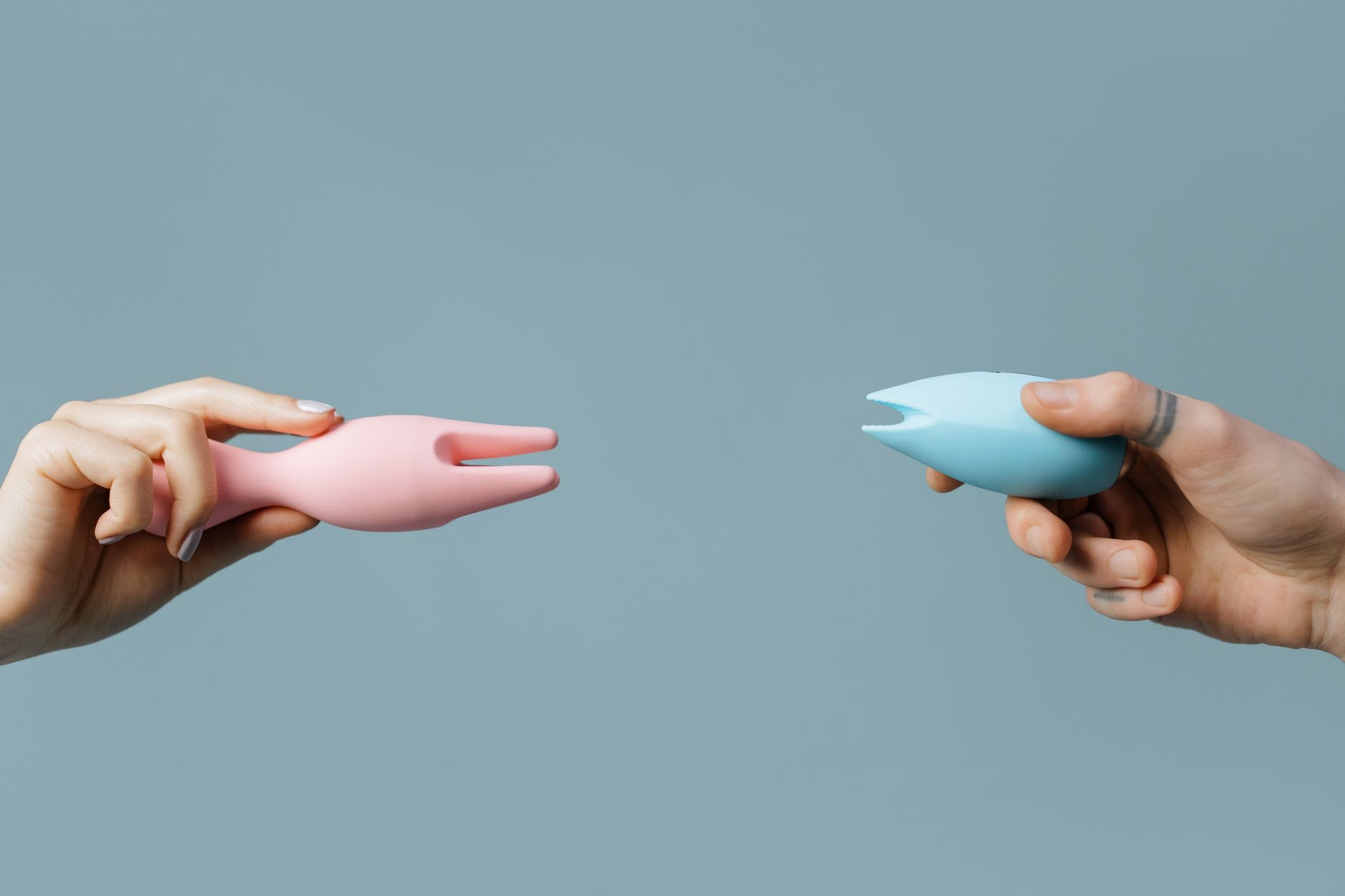
Most vibrators work through oscillation or vibration. Direct motion against tissue. If your clitoris is numb to that pattern, adding a faster vibration often just adds frustration. A lemon sucker vibrator, like the Lem, uses air-pulse technology. Gentle suction. It's different enough that it can bypass the desensitization problem entirely.
Here's why this matters: your clitoris responds to pressure changes, not just friction. When you add a lemon vibrator's suction pattern to tissue that's been numbed by conventional vibration, you're introducing a completely new stimulus. Your nerve endings haven't adapted to it yet. The sensation often comes back immediately. Not always, but often enough that this is worth trying before anything invasive.
The suction also increases blood flow to the area, which physically restores some of the sensitivity that numbness had stolen.
Starting over with a new sensation pattern
If you've been using one vibrator for years, switching to a lemon clitoral vibrator isn't just about the toy. It's about resetting your expectations of what arousal should feel like.
Start on the lowest setting. Seriously. The Lem has eight intensity levels, and most people with clitoral numbness benefit from starting at 1 or 2, not diving straight to 5. Build from there. You're not looking for the strongest sensation. You're looking for the first sensation that actually registers as pleasure instead of pressure.
Budget 20-30 minutes for this kind of exploration. Arousal when you're chasing numbness takes longer than arousal when sensation is already present. There's a neurological lag. Your brain needs time to recognize that feeling is happening again.
If your partner is involved, separate the experience from performance. This isn't foreplay toward partnered sex. This is you reacquainting yourself with your own sensation. Sex comes later, if at all, during that session.
The pelvic floor connection no one mentions
Tight pelvic floor muscles reduce blood flow and compress nerves. And if you've been numb for a while, you probably tightened that floor unconsciously, trying to feel something. Now you've got a feedback loop. Tight muscles create numbness, numbness creates tension, tension creates more numbness.
Breaking this loop requires active relaxation. Not Kegels. The opposite. Breathing into the pelvic floor. Progressive relaxation. Sometimes, a physical therapist who specializes in pelvic health. But often, switching to a sensation pattern that feels better (like a lemon vibrator's suction) breaks the tension loop on its own. You relax because something finally feels good again.
When medication is the culprit
If numbness started after you began antidepressants, birth control, or another medication, talk to your prescriber. Don't stop taking it. But ask if there are alternatives. Some SSRIs numb sensation more than others. Switching from sertraline to bupropion, for instance, can sometimes restore feeling that had flatlined.
If a medication switch isn't possible, a lemon clitoral vibrator can help bridge the gap while your body adapts. Most people report that even if medication-related numbness doesn't fully resolve, the suction pattern feels distinctly better than conventional vibration did.
The hormonal angle and when to wait for it to return
If you're mid-cycle or in the luteal phase (second half of the cycle), clitoral sensitivity is naturally lower. Same thing happens around ovulation, then again at the start of your period. This is physiologically normal. It's not numbness. It's just the rhythm of your body.
True numbness persists across the entire cycle. If you're only noticing it during certain weeks, you might just be dealing with normal hormonal fluctuation. Track it. Use a lemon vibrator on your low-sensitivity days and notice whether you feel the difference on high-sensitivity days. Often, you will. That's normal. Not numbness.
What else helps alongside a lemon vibrator
A new toy is part of the solution, not the whole solution.
Lubricant matters more when sensation is already reduced. Water-based lube increases slickness without adding friction, which means you can use a lemon vibrator longer without irritation. That matters because rewaking sensation sometimes takes 20-30 minutes, not 5.
Mindfulness or pelvic floor breathing during use helps. Your brain has learned to brace against numbness. Telling it to relax is harder than it sounds. Breath work gives your nervous system something to do besides wait for feeling. Often, sensation returns faster when your brain is occupied with breathing rhythm instead of hunting for sensation.
Switching up your environment sometimes helps too. Different room, different time of day, different lighting. Your nervous system is used to the old context paired with numbness. New context can reset that association.
When to seek help beyond a vibrator
If numbness has persisted for months despite trying different stimulation patterns, if it's painful, or if it showed up suddenly after an injury or surgery, see a pelvic health physical therapist. They can assess whether nerve compression, scar tissue, or muscle tension is actually the issue. Some causes need hands-on treatment. A vibrator can't fix all of them.
If numbness came on suddenly alongside other symptoms (pain during sex, bladder issues, lower back pain), see a gynecologist. Rarely, numbness signals something that needs medical attention. Usually it doesn't. But it's worth ruling out.
The reset you're actually looking for
When you've been numb for a while, your brain stops expecting sensation. You use a vibrator out of habit, not hope. Switching to something as different as a lemon vibrator often works because it interrupts that learned helplessness. Suction feels unlike anything you've tried. Your nervous system wakes up. And sometimes, that's all it takes to remember what pleasure actually feels like.
Try it. Budget time. Start low. Breathe. See what comes back.
People also ask
Can clitoral numbness go away on its own?
Sometimes, yes. If numbness is tied to medication, hormonal fluctuation, or fatigue, it often resolves when the underlying cause shifts. Menstrual cycle numbness goes away in a week or so. Medication-related numbness sometimes improves as your body adapts (though not always). Stress-related numbness can lift when stress decreases. But numbness from years of repetitive stimulation rarely self-corrects without changing the stimulus pattern. That's where a new toy like a lemon vibrator comes in.
Does using a vibrator make clitoral numbness worse?
Not if you're using it correctly. But using the wrong pattern or intensity can deepen the problem. If you've been using vibration to fight numbness, and it's not working, that's a sign the pattern itself is part of the issue. Switching to a completely different mechanism, like air-pulse suction, usually helps rather than hurts. You're not adding more of the same deadening stimulus. You're interrupting it.
Is clitoral numbness related to aging?
It can be. Post-menopausal tissue is thinner and sometimes less sensitive to direct friction. But plenty of people age into better sensation. The key difference is whether you've adapted your approach. If you're using the same toy and technique at 50 that you used at 30, and your tissue has changed, numbness makes sense. Switching to a different lemon clitoral vibrator design or a lemon sucker that works via suction instead of friction often fixes this age-related shift. It's not permanent.
How long does it take to regain sensation after numbness?
It varies. Some people feel a shift the first time they try a lemon vibrator set to a new pattern. Others need several sessions over a week or two for sensation to truly return. If numbness was caused by medication, it might take as long as your body needs to adjust to that medication, or until you switch meds. Pelvic floor tension usually loosens within days once you're using a pattern that feels better. The timeline isn't fixed. But most people notice some change within 2-3 sessions.
Can I use a lemon vibrator if I have vulvodynia or clitoral pain?
Maybe, but carefully. If you have pain along with numbness, a full clinical assessment matters before introducing any new stimulation. Sometimes air-pulse suction is gentler on painful tissue than vibration. Sometimes it's too much. A pelvic health physical therapist can help you figure out what's safe. If you do try a lemon vibrator, start on the absolute lowest setting and stop immediately if pain increases. Numbness and pain are different problems, even when they happen together.
What's the difference between numbness and low desire?
Numbering is a sensory issue. Your body isn't delivering feeling, even if you want it. Low desire is a motivation or interest issue. You're not interested in sex, even if your body would feel it if you tried. They're completely different, and they need different solutions. A lemon vibrator helps numbness. It doesn't automatically restore desire. If you have low desire alongside numbness, exploring the sensation with a new toy sometimes rebuilds interest. But that's a side effect, not the primary treatment.
Sources
Osada, H. (2012). "The World of Sexology and My Personal Experience as a Sexologist." Journal of Sexual Medicine, 9(3), 643-648.
Levin, R. J. (2003). "The Physiology of Sexual Arousal in the Human Female: A Recreational and Procreational Synthesis." Archives of Sexual Behavior, 31(5), 405-411.
Berman, J. R., Berman, L., & Goldstein, I. (1999). "Female Sexual Dysfunction: Incidence, Pathophysiology, Evaluation, and Treatment." Urology, 54(3), 385-391.